
Summary:
You’ve seen the ads. Learn bartending from your couch. Get certified in a weekend. Start earning tips next week. It sounds perfect—until you show up for your first interview and realize you’ve never actually poured a drink under pressure, worked a soda gun, or handled a rush. Online bartending courses teach you what drinks are made of, but they can’t teach you how to make them when three customers are waiting, the phone’s ringing, and your manager needs change for the register. If you’re serious about bartending in Nassau County, you need to know what actually gets you hired and what just wastes your time and money.
What Online Bartending Courses Actually Teach You
Let’s be honest about what you’re getting. Most online bartending courses are basically digital recipe books with some videos thrown in. You’ll learn that a Manhattan has whiskey, vermouth, and bitters. You’ll watch someone demonstrate a pour. You’ll take a quiz about glassware.
That’s not worthless. Knowing recipes and understanding spirits matters. But here’s what you won’t get: muscle memory from actually shaking a cocktail shaker 200 times. The feel of finding bottles behind you without looking. The rhythm of making four different drinks simultaneously while keeping a conversation going.
Online courses cost less for a reason. You’re learning theory, not practice. And when you walk into a Nassau County bar for an interview, the manager isn’t going to quiz you on the history of the Old Fashioned—they’re going to watch how you move behind the bar.

Can You Learn Mixology Skills Through a Screen
Here’s the uncomfortable truth that online bartending programs don’t advertise: you cannot develop bartending skills by watching videos. You can understand concepts. You can memorize information. But skills require repetition with real equipment in real conditions.
Think about it this way. Could you learn to drive by watching YouTube videos? Technically, you’d understand how a car works, what the pedals do, and what road signs mean. But the first time you actually got behind the wheel, you’d be dangerous. Bartending works the same way.
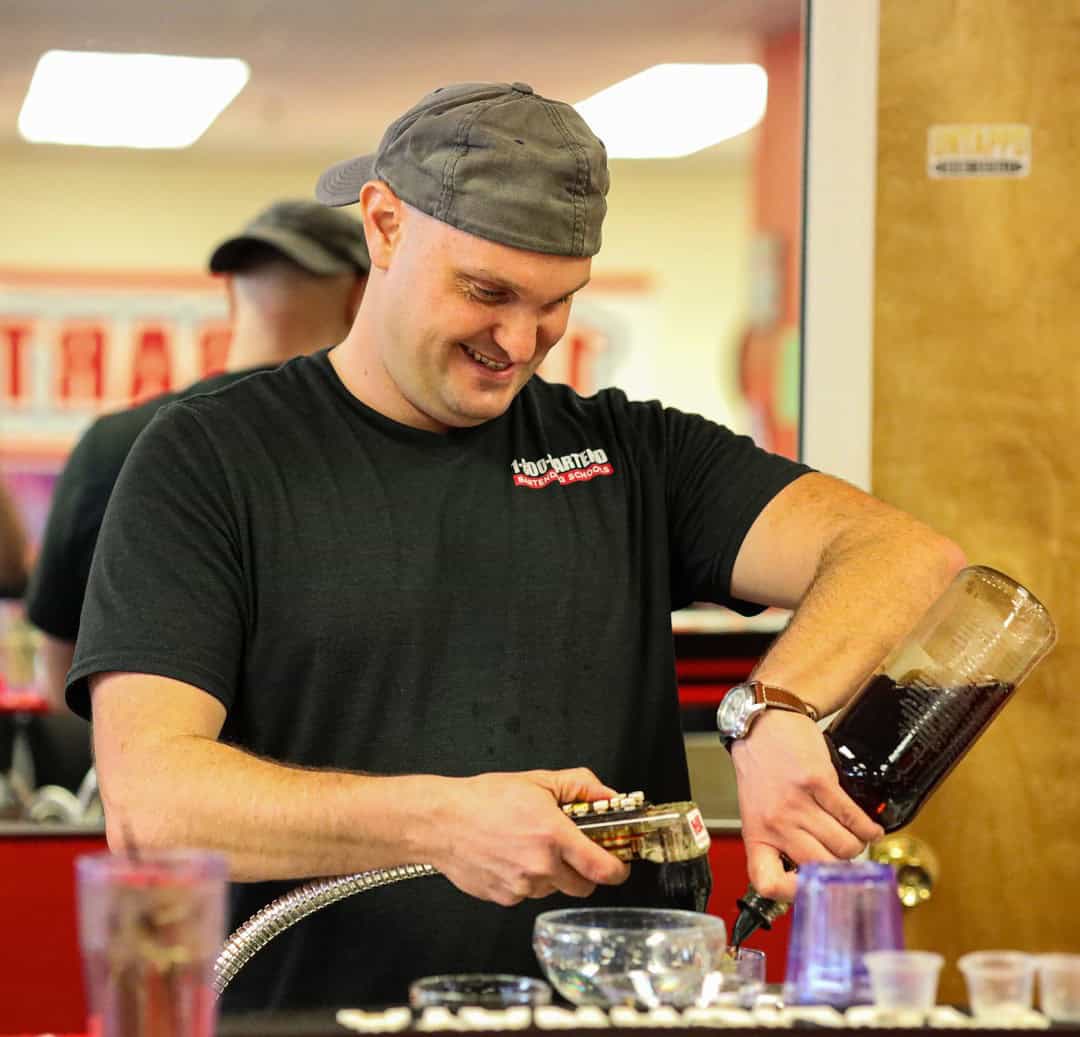
The physical components of bartending—speed pouring, free pouring accurately, using a soda gun, working a POS system during a rush, carrying multiple glasses without dropping them—these all require hands-on practice with immediate feedback. When you pour too slowly or grab the wrong bottle, you need to feel it in the moment and correct it. An online course can’t give you that.
Most online programs will tell you to “practice at home.” But practicing alone with a shaker and some water isn’t the same as working behind an actual bar setup with professional equipment. You’re not learning the layout, the reach, the workflow, or the pressure. You’re rehearsing in your kitchen, which is nothing like the real environment.
Even worse, you’re developing habits without anyone there to correct them. If your grip is wrong or your pour technique is inefficient, you’ll practice that wrong method until it becomes automatic. Then you’ll have to unlearn it when you finally get real training.
The bartenders who succeed aren’t the ones who memorized the most recipes online. They’re the ones who spent hours behind an actual bar, making mistakes, getting corrected, and building the physical confidence that employers can see the moment you step behind their bar.
Why Most Bars Won't Hire Online-Only Graduates
This is where online bartending courses really fall apart. The certification might look official, but bar managers in Nassau County know the difference. Many have seen dozens of online graduates walk through their doors, certificate in hand, completely unprepared for the actual job.
Some managers are blunt about it. Job postings specifically say “no recent bartending school graduates”—and they’re usually talking about online programs. Why? Because hiring someone who’s never actually worked behind a bar is a liability. They slow down service, make costly mistakes, and often quit within the first week when they realize how different the real job is from what they studied.
Bar managers need people who can start contributing immediately. When they’re interviewing candidates, they’re not just looking at your resume—they’re watching how you carry yourself, how you talk about the work, whether you seem comfortable discussing the physical aspects of the job. Someone with hands-on training speaks differently. They reference specific equipment, talk about workflow, and demonstrate understanding of the actual environment.
Your online certificate tells the manager you watched some videos and passed a test. That’s it. It doesn’t prove you can handle a Friday night rush, work cleanly and efficiently, or stay calm when everything goes wrong at once. And in a competitive market like Nassau County where hundreds of people are applying for the same positions, that certificate isn’t enough to get you hired.
The harsh reality is that most online-only graduates end up having to start as barbacks or servers anyway—the same positions they could have started with before spending money on the online course. Except now they’ve wasted time and money on training that didn’t actually advance their career.
What Bartending Classes Online Can't Replicate
There are specific elements of professional bartending that simply cannot be taught through a screen. These aren’t minor details—they’re fundamental skills that separate employable bartenders from people who just know drink recipes.
Equipment familiarity is the first major gap. Real bars use soda guns, speed rails, ice wells, glass racks, and POS systems. You need to know where everything is without looking, how to maintain your station during service, and how to move efficiently in a confined space. Online courses can show you pictures of this equipment, but they can’t give you the physical experience of actually using it.
Then there’s speed and accuracy under pressure. Making one perfect cocktail in your kitchen is completely different from making twenty drinks in ten minutes while customers are watching, talking to you, and expecting perfect service. The pressure changes everything—your hands shake differently, you second-guess yourself, you forget steps. Learning to work through that pressure requires real practice in real conditions.

The Real Cost of Choosing Bartender Training Online
Online bartending courses advertise their low prices as a major selling point. Fifty to two hundred dollars sounds like a steal compared to in-person programs. But you need to think about cost differently—not what you pay upfront, but what it costs you in lost time and opportunities.
Here’s what actually happens to most people who take online-only courses. They complete the program, get their certificate, and start applying for bartending jobs. They get rejected repeatedly because they have no practical experience. After weeks or months of rejection, they either give up on bartending entirely or realize they need to start over with proper hands-on training.
Now they’ve spent money on the online course that didn’t help them, wasted weeks or months they could have spent training properly, and still need to invest in real training to actually get hired. The “cheaper” option ends up costing more in both money and time.
Compare that to someone who invests in hands-on training from the start. Yes, professional programs cost more upfront—typically four hundred to eight hundred dollars for quality in-person training. But that training actually leads to employment. You’re not just learning recipes; you’re building genuine skills that employers value.
The return on investment is completely different. With proper training, you can be working behind a bar within a week or two, earning tips and building real experience. An online course might save you a few hundred dollars, but it delays your earning potential by months. When you calculate the lost income from those months of unemployment or underemployment, the online course becomes the more expensive option.
There’s also the hidden cost of damaged confidence. When you show up to interviews unprepared, get rejected repeatedly, and realize you can’t actually do what you thought you learned, it affects how you see yourself and the career. Many people abandon bartending entirely after the online course experience, never realizing that the problem wasn’t their potential—it was their training method.
Smart career decisions aren’t about finding the cheapest option. They’re about finding the option that actually gets you where you want to go. In bartending, that means hands-on training with real equipment, real feedback, and real preparation for the actual job.
Why Nassau County Employers Prefer Hands-On Graduates
Nassau County’s bar and restaurant scene is competitive and professional. Employers here aren’t looking for people who memorized drink recipes from an online mixology course—they need bartenders who can actually work. That distinction matters more than most online course graduates realize.
When you complete hands-on training at a real bartending school, you walk into interviews differently. You’ve worked with professional bar equipment. You’ve practiced making drinks under time pressure. You’ve learned the physical workflow of a real bar. Employers can see that experience in how you carry yourself and how you talk about the work.
The certification matters too, but not the way online programs suggest. Nassau County employers want to see New York State A.T.A.P. certification, Alcohol Beverage Control Law training, and B.A.R. credentials—not because these are legal requirements (New York doesn’t mandate bartending licenses), but because they show you’ve been trained to professional standards. We include these certifications as part of our comprehensive hands-on program.
Employers also value the job placement networks that real bartending schools maintain. When a bar manager in Nassau County needs a new bartender, they often call established training programs first because they know those graduates are actually prepared. Those industry connections don’t exist for online course graduates. You’re on your own, competing against candidates who have both training and school backing.
The time factor matters too. Nassau County bars need people who can start contributing immediately. If they hire you and then have to spend weeks teaching you everything the online course didn’t cover, they’ve made a bad hiring decision. But if you show up already comfortable behind a bar, already familiar with equipment, and already trained in proper technique, you’re valuable from day one.
Think about it from the employer’s perspective. They’re choosing between someone who watched videos and someone who spent a week working behind a real bar setup, getting corrected by experienced instructors, and practicing until the movements became automatic. Who would you hire? The answer is obvious—and that’s why hands-on training leads to employment while online courses lead to rejection.
How to Actually Start Bartending in Nassau County
If you’re serious about bartending, stop looking for shortcuts. Online courses aren’t faster or more convenient when you factor in all the time you’ll waste being unemployable afterward. The real fast track is proper training that actually prepares you for the job.
Look for programs that offer hands-on practice with real bar equipment, official New York certifications, and actual job placement assistance. Programs that can get you working behind a bar in one week exist—but they’re in-person, intensive, and focused on building real skills, not just knowledge.
The investment pays off immediately. Instead of spending months applying and getting rejected, you’ll have the training, certification, and confidence that Nassau County employers actually want. You’ll walk into interviews as someone who can contribute from day one, not someone who needs extensive on-the-job training to catch up to what you should have learned in school.
Your bartending career doesn’t start when you finish an online course. It starts when you can actually work behind a bar—and that requires real training with real equipment in real conditions. Choose the path that gets you there, not the one that just gets you a certificate. We offer the hands-on preparation that Nassau County employers respect and the industry connections that lead to actual employment.