Summary:
You’ve seen the ads for virtual cocktail classes. Affordable, convenient, learn from home. Sounds perfect, right? Here’s what those ads don’t tell you: there’s a massive difference between learning to make drinks for fun and training for a bartending career that actually pays. If your goal is impressing friends at your next party, virtual works fine. But if you’re trying to land a job at a Nassau County bar or restaurant where you’ll earn $200+ in tips per shift, you need to understand what employers actually look for. Most hiring managers can spot the difference between someone who watched videos and someone who trained with real equipment in about 30 seconds. Let’s talk about why that gap matters and when each option makes sense.
What Virtual Cocktail Classes Actually Teach You
Virtual cocktail classes have exploded in popularity, and for good reason. They’re accessible, often affordable, and you can learn from your couch. These online programs typically cover drink recipes, ingredient combinations, cocktail history, and basic mixing theory. You’ll learn what goes into a Manhattan, how to balance sweet and bitter flavors, and maybe some impressive trivia about prohibition-era speakeasies.
For home bartending, team building events, or just expanding your cocktail knowledge, virtual classes deliver real value. They work well when your goal is entertainment, not employment. The instruction can be solid, the information accurate, and the experience genuinely enjoyable.
Where Virtual Mixology Courses Fall Short for Professional Work
The problem starts when you try to translate virtual learning into a professional bartending career. No matter how good the online cocktail class, it can’t replicate the physical skills you’ll use during every single shift. You’re not developing muscle memory for free-pouring accurate measurements. You’re not learning to work a soda gun while taking three orders simultaneously. You’re not practicing on an actual POS system that you’ll need to navigate during a Friday night rush.
Think about it this way: you can watch every YouTube video about swimming, but you won’t actually know how to swim until you get in the water. Bartending works the same way. The physical coordination required to shake a cocktail properly, the speed needed to keep up with a packed bar, the instinct for where everything is located without looking—these skills only develop through repetition with real equipment.
Employers in Nassau County know this. When they’re interviewing candidates, they’re looking for people who can step behind their bar and perform under pressure. A certificate from a virtual mixology class might show you’re interested in bartending, but it doesn’t prove you can handle a Saturday night shift at a busy Long Island restaurant. Most hiring managers have seen enough candidates who “learned online” struggle with basic tasks to become skeptical of virtual-only training.
New York State also requires ATAP certification for anyone serving alcohol legally. While you can complete some compliance training online, the comprehensive preparation employers expect goes far beyond checking a legal box. They want bartenders who understand the practical application of responsible service, not just the theory.
When Online Cocktail Class Options Make Sense
Virtual cocktail classes aren’t worthless—they’re just designed for different goals. If you’re planning a virtual happy hour with remote coworkers, an online mixology session works perfectly. Corporate teams use these classes for team building, and they’re genuinely effective for that purpose. You’ll laugh, learn some cocktail trivia, and maybe discover you actually enjoy making drinks at home.
Home bartending enthusiasts get real value from virtual classes too. Learning to craft better cocktails for dinner parties or weekend gatherings doesn’t require professional-grade skills. You’re not racing against a timer or managing multiple orders. You can pause, rewatch sections, and practice at your own pace without the pressure of customers waiting for drinks.
Online cocktail classes also work as a supplement to hands-on training, not a replacement. Maybe you’ve completed professional bartending school and want to expand your cocktail knowledge with specialized topics like tiki drinks or molecular mixology. Virtual courses let you explore these niches affordably without committing to another full program.
The key is matching the format to your actual goal. Want to make better drinks at home? Virtual works great. Want to earn $200+ in tips per night at a Nassau County establishment? You need hands-on training with real equipment and employer connections. Trying to use virtual classes for professional preparation is like using a bicycle to train for a motorcycle license—there’s some overlap, but you’re missing the critical components.
Why In Person Bartending Class Training Changes Your Career Prospects
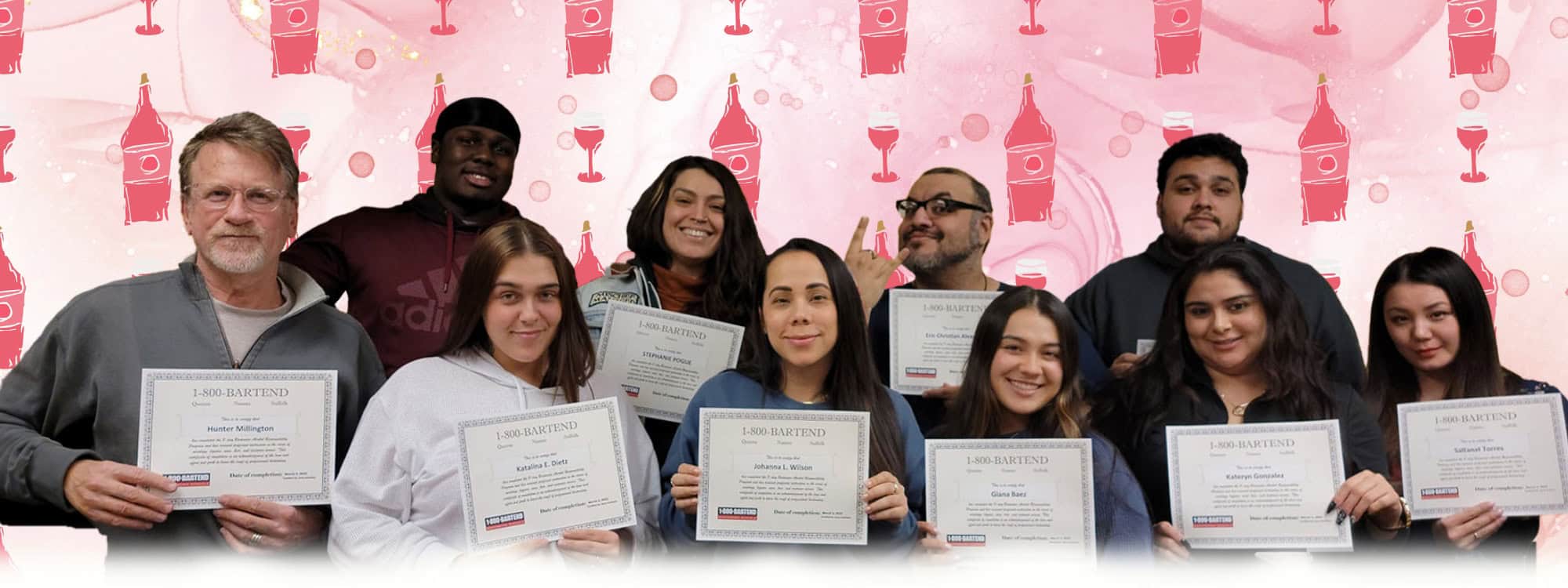
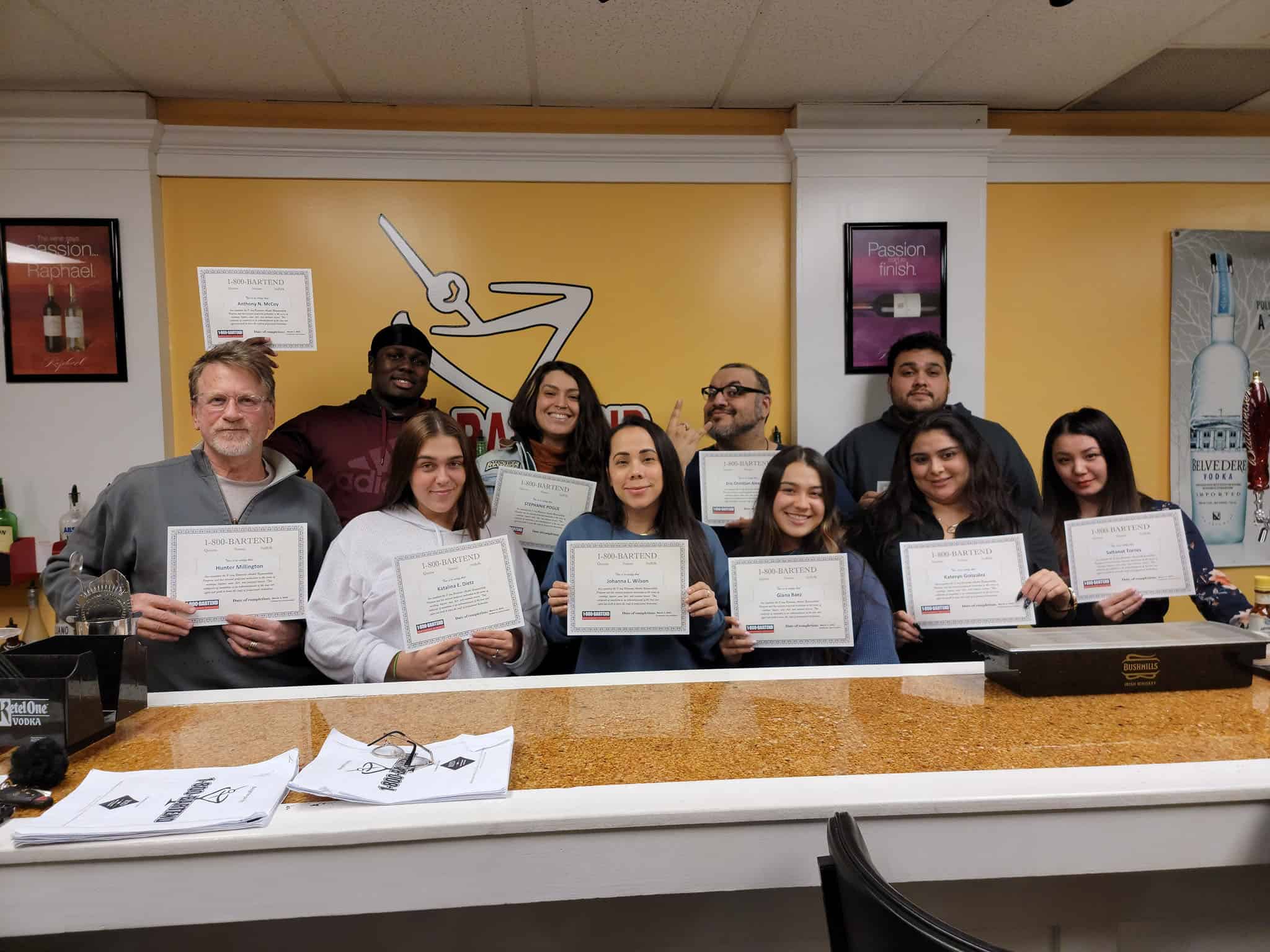
Walk into our professional bartending school in Long Island or Queens, and you’ll immediately see the difference. Real bars, actual soda guns, working POS systems, professional glassware—everything you’ll use in an actual job. This isn’t about being fancy. It’s about training your hands and your brain to work together under realistic conditions before your first paying shift.
In-person bartending classes force you to develop the physical skills that separate employed bartenders from hopeful applicants. You’re practicing free-pours until you can measure accurately without thinking. You’re learning to navigate a bar setup efficiently, so you’re not wasting time searching for ingredients during a rush. You’re building the confidence that comes from repetition with real equipment, not imagination.
The Hands-On Skills Employers Actually Hire For
Hiring managers in Nassau County aren’t impressed by how many cocktail recipes you’ve memorized. They care whether you can work their bar efficiently during peak hours without falling apart. That requires specific physical skills you can only develop through hands-on practice.
Speed matters more than perfection when you’re three-deep with customers on a Friday night. You need to know where everything is located without looking, how to keep your station organized while making multiple drinks, and how to move efficiently without wasting motion. These aren’t skills you can learn from watching videos—they come from repetition in a realistic bar environment.
Equipment familiarity is another huge factor. Every bar has slightly different setups, but the fundamentals remain consistent. When you’ve trained on actual soda guns, you understand how they work and can adapt to any bar’s specific system. Same with POS systems, cash registers, and bar tools. The first time you use these shouldn’t be during a paid shift with customers waiting.
We also teach you to handle high-pressure situations before they cost you a job. You’ll practice managing multiple orders simultaneously, dealing with difficult customers, and maintaining composure when everything feels chaotic. These scenarios are impossible to simulate in a virtual environment, but they’re guaranteed to happen in real bars.
The difference shows up immediately during interviews. When a hiring manager asks about your experience with their specific equipment or how you’d handle a rush, candidates with hands-on training can speak confidently from actual practice. Virtual-only students can only guess based on theory. That gap determines who gets hired.
Job Placement Networks You Can't Access Through Virtual Training
Here’s something most people don’t realize until they start job hunting: the best bartending positions in Nassau County rarely make it to public job boards. Managers prefer hiring through industry connections and referrals because it reduces their risk. They’d rather hire someone recommended by a training program they trust than gamble on a stranger from the internet.
We’ve maintained relationships with hundreds of local establishments over our 30+ years in business. These connections developed over decades of placing reliable graduates. When a bar needs a new bartender, they often call us first. You can’t access this network through a virtual cocktail class—it only comes with programs that have invested in building local industry relationships.
Our job placement support extends beyond just listings. We help you prepare for interviews, understand what different establishments are looking for, and present yourself as a serious candidate. We know which bars are hiring, what those bars pay, and what kind of personalities succeed in different environments. This insider knowledge dramatically shortens your path from training to employment.
We offer lifetime career support and a 24/7 alumni job portal. That means even years after completing your training, you still have access to new opportunities and refresher courses. Virtual programs can’t replicate this kind of ongoing professional support because they don’t have the local presence and industry relationships required.
The difference in job placement rates tells the story. Schools with strong hands-on programs and employer networks consistently place graduates within weeks of certification. Virtual-only students often struggle for months trying to break into an industry that doesn’t know them and hasn’t seen them work with real equipment.
Making the Right Choice for Your Bartending Goals
Virtual cocktail classes have their place. They’re fun for team building, useful for home bartending, and fine for learning theory. But if you’re serious about bartending as a career in Nassau County, hands-on training isn’t optional—it’s the difference between getting hired and getting passed over.
Professional bartending requires physical skills, equipment familiarity, and industry connections that virtual programs simply can’t provide. You need to practice with real bar setups, develop muscle memory under realistic conditions, and build relationships with employers who are actually hiring. That only happens through in-person training.
The investment pays off immediately. While virtual classes might cost less upfront, hands-on training gets you employed faster and earning more. When you’re making $200+ in tips per shift, the difference in training costs becomes irrelevant. If you’re ready to launch a real bartending career with proper training, state certification, and direct employer connections, we offer the hands-on preparation Nassau County employers actually hire for.