Summary:
You’re looking at bartending school websites, calculating whether $400 to $800 makes sense, and reading wildly conflicting reviews. Some bartenders swear formal training launched their careers in a week. Others insist they learned everything on the job and school is a waste of money.
Here’s what matters: which path gets you hired faster and earning bigger tips? This analysis uses real hiring data, earning statistics, and employer preferences to show you exactly what bartending school delivers versus teaching yourself. You’ll see the actual timeline, costs, and outcomes for both approaches so you can make the right choice for breaking into bartending in Nassau County, NY.
Self Taught Bartender vs Bartending School: Real Career Timeline Comparison
Can you become a self taught bartender without formal training? Absolutely. Thousands of successful bartenders learned on the job, starting as barbacks and working up over six months to two years.
The real question isn’t whether it’s possible. It’s whether bartending school compresses that timeline enough to justify the investment. And whether formal training opens doors that stay closed to self-taught candidates trying to break in.
The answer depends on what Nassau County, NY employers actually want when they’re filling bartending positions. Let’s look at both paths with real numbers.

Bartending School Benefits: Speed, Skills, and Industry Connections
Here’s the honest breakdown of what bartending school actually delivers. You’re not paying for a certificate that magically guarantees employment. You’re paying to compress months of learning into one week and gain access to employer networks that don’t advertise publicly.
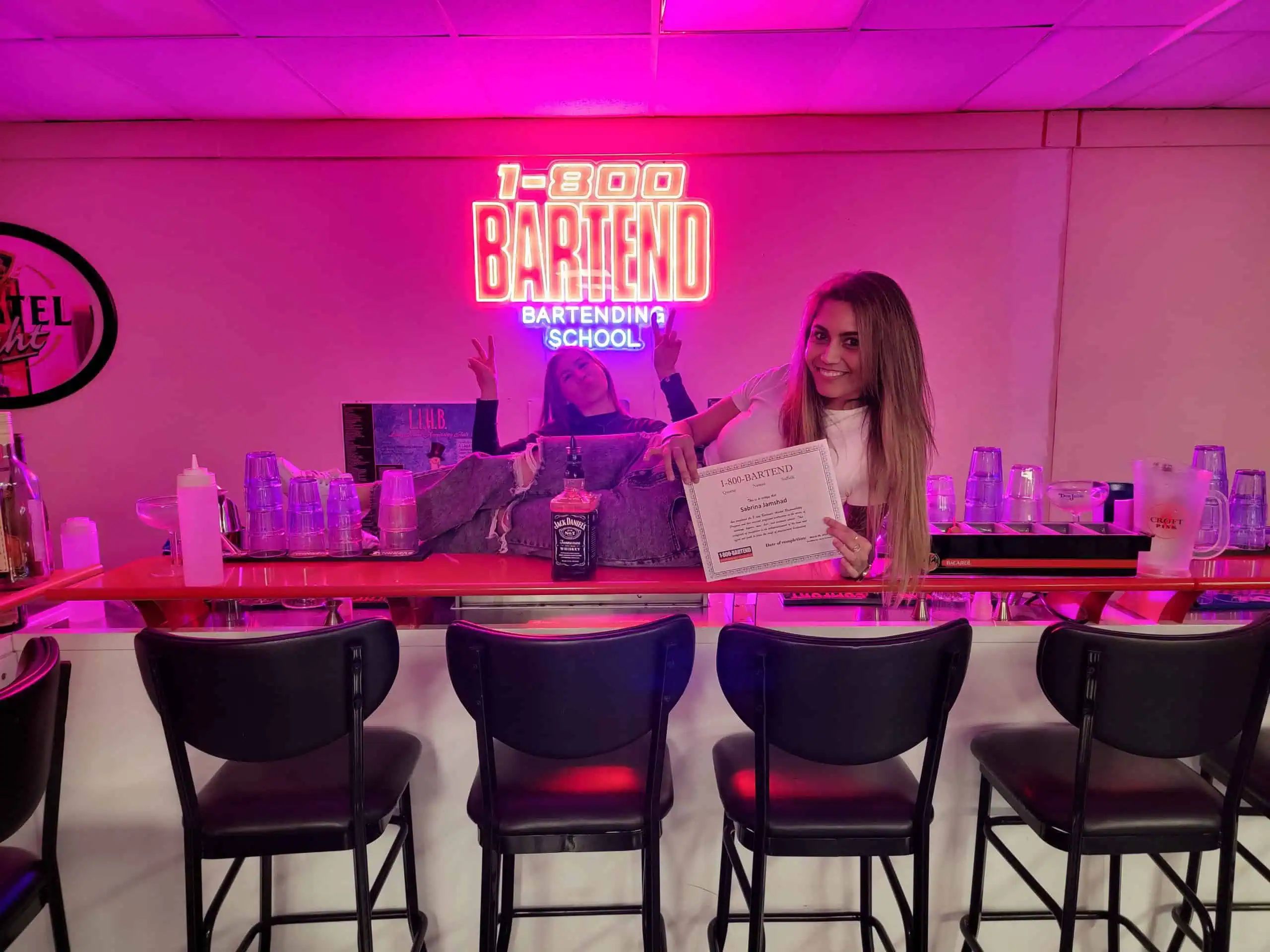
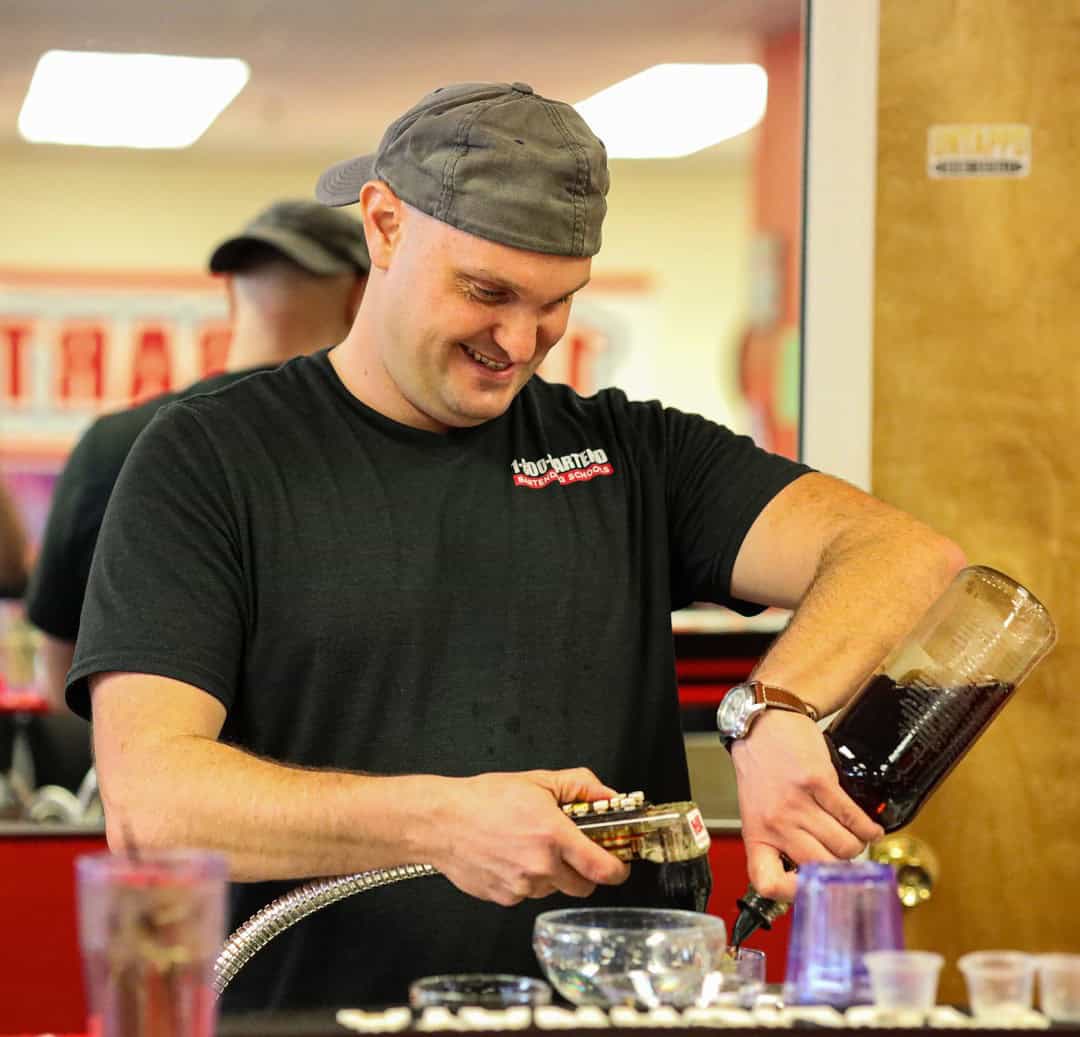
A legitimate bartending program condenses 40 hours of hands-on practice into five days. You work with real bar equipment—soda guns, glassware, cash registers, POS systems—making hundreds of drinks until the motions become automatic. That’s practice time you’d otherwise get in small increments over months while juggling barback duties.
The curriculum covers more than drink recipes. You learn cash handling, inventory management, NY State alcohol service laws, and customer interaction techniques. These business operations skills rarely get taught systematically on the job. Most barbacks pick them up piecemeal, if they pick them up at all.
Certification carries weight in Nassau County, NY specifically. Many employers prefer or require NY State ATAP certification. Insurance companies often push bar owners to hire certified staff to reduce liability. Having that credential removes a hiring obstacle and signals you understand legal responsibility, can identify intoxication, and know how to prevent underage sales.
The networking component matters more than most people realize. Schools with 30+ years of industry presence maintain relationships with hiring managers across Nassau County, Suffolk County, and Queens. When positions open, managers often call trusted schools first before posting publicly. If you’re not connected to that network, you’re competing for whatever’s left on Indeed after the good positions are filled through referrals.
Job placement quality varies dramatically between schools. Some hand you a certificate and wish you luck. Others provide resume help, interview preparation, direct introductions to hiring managers, and 24/7 job portals with opportunities that never hit public boards. The difference in time-to-employment is substantial.
The confidence factor is real. Walking into your first bartending interview knowing you’ve already made 200 drinks under pressure feels different than hoping someone gives you a chance to learn. That confidence shows in how you present yourself, answer capability questions, and negotiate your starting position.
Learn Bartending Without School: Timeline, Costs, and Skill Gaps
The traditional path into bartending requires zero upfront investment. You start as a barback or server, watch bartenders work, ask questions, practice during slow periods, and eventually get promoted when a position opens. You’re earning money while learning instead of paying for training.
The timeline tells the real story though. Most barbacks spend six months to two years in that role before moving behind the bar. During that time, you’re making $12-15 per hour instead of the $150+ daily tips bartenders earn. You’re restocking bottles, changing kegs, hauling ice, and cleaning up spills. You learn how bars operate, but you’re not the one making drinks and collecting tips.
Your skill development is limited by your environment. If you work at a sports bar serving mostly beer and simple mixed drinks, you won’t develop cocktail skills needed for upscale venues. If your bar uses automated systems, you might never learn free-pouring. The skills you develop as a self taught bartender reflect wherever you happen to land your first position.
The catch-22 creates real friction for newcomers. Employers need experienced bartenders during busy shifts. They can’t afford someone learning on the job when 50 people are waiting for drinks. So they hire experienced bartenders for money-making shifts and use barbacks to cover gaps. Breaking into that bartender rotation requires waiting for someone to quit or proving yourself exceptional during rare slow moments when they’ll let you practice.
Self-teaching requires initiative not everyone has. You study drink recipes on your own time, watch YouTube videos about technique, read books about spirits and mixology, and practice pouring at home. Some people thrive with self-directed learning. Others struggle without structure and never develop comprehensive knowledge that formal training provides systematically.
The business operations gap is where self-taught bartenders often fall short. You might learn to make great drinks, but do you understand pour costs? Inventory rotation? How to spot fake IDs? Legal liability for overserving? These aren’t skills you pick up watching bartenders work. They require intentional instruction that happens in formal training but gets skipped in casual on-the-job learning.
Starting as a barback offers one major advantage: you’re getting paid to learn instead of paying to learn. If money is tight and you have time for the longer path, working your way up makes financial sense. You build relationships with managers who see your work ethic firsthand, which matters more than any certificate when promotion time comes.
The reality check: most bar managers prefer promoting from within. If you’re already working at the establishment as a barback, you’re first in line when bartending positions open. An unknown bartending school graduate is still an unknown quantity. Experience in their specific environment carries more weight than a certificate from a school they don’t know.
What Employers in Nassau County Actually Want When Hiring Bartenders
Talk to ten different bar managers about bartending school and you’ll get ten different answers. Some dismiss it entirely and only hire experienced bartenders or promote from within. Others specifically recruit from schools they trust because graduates arrive with consistent baseline skills.
The pattern that emerges: employers care less about where you learned and more about whether you can handle their bar during Friday night rush. The certificate itself doesn’t impress them. Your ability to make drinks quickly, handle cash accurately, manage difficult customers, and keep operations running smoothly—that’s what gets you hired and keeps you employed.
Nassau County, NY has over 1,400 bartending job openings right now. The opportunities exist. The question is whether you have the skills and connections to access them.

Skills Bartending School Can't Teach: The Experience Gap
The biggest limitation of bartending school is obvious: it can’t replicate the pressure of a real bar during Friday night rush. You practice making drinks in a classroom with classmates, but that’s nothing like managing eight tickets simultaneously while three people are yelling orders and someone just spilled a drink.
Bartending school teaches mechanics. It can’t teach you how to read a room, defuse an argument between drunk customers, remember regulars’ favorite drinks, or manage your energy through a ten-hour shift. Those skills only develop through actual experience behind a working bar.
The classroom environment lacks the chaos factor. Real bars run out of ingredients mid-shift. The POS system crashes. A glass breaks and you need to keep working while cleaning it up. Someone orders something you’ve never made and you need to figure it out on the fly. These real-world problems teach you more about bartending than any structured curriculum.
Customer service skills matter as much as technical ability. Some people naturally connect with customers, make them feel welcome, remember names, and create the atmosphere that generates big tips. Other people make perfect drinks but lack the personality that keeps customers coming back. Bartending school can teach you what to say, but it can’t give you genuine hospitality instincts.
The experience gap explains why most bar managers won’t hire someone straight out of bartending school for prime shifts. You might have the technical foundation, but you haven’t proven you can handle volume and pressure. That’s why even school graduates typically start as barbacks or cover slow shifts before moving into high-earning weekend nights.
What formal training does provide is the foundation that makes on-the-job learning faster. When you start your first real bartending shift, you’re not also trying to remember basic drink recipes or figure out how to use a jigger. You can focus on speed, customer interaction, and handling chaos because the fundamentals are already automatic.
This is where we differentiate ourselves. With over 30 years placing graduates in Nassau County, Suffolk County, and Queens establishments, we know exactly what local employers expect. Our training focuses on practical skills you’ll use on day one, not theoretical knowledge that sounds impressive but doesn’t help you handle a Saturday night rush.
Bartending Career Earnings: What You'll Actually Make in Nassau County, NY
The financial calculation goes beyond just landing your first job. Bartenders in Nassau County, NY earn a median hourly wage around $16-19, but tips are where real money comes from. The average bartender makes $150 per day in tips, which adds up to $96,000+ annually when you factor in base pay for full-time work.
Your earning potential depends more on where you work than how you learned. A bartender at a dive bar might make $50-100 in tips on a slow night, while someone working upscale restaurants or private events can pull $400-600 in a single shift. The venue, clientele, and your skill level determine your income far more than whether you attended bartending school.
Career advancement follows experience, not education. Moving into bar management, opening your own establishment, or consulting for restaurants requires years of real-world work regardless of how you started. The bartending certification doesn’t fast-track you to management. Your track record of increasing sales, managing inventory efficiently, and training other staff—that’s what creates advancement opportunities.
The time-to-earning calculation is where bartending school shows its value most clearly. If school gets you behind the bar earning tips six months faster than the barback route, you’re making an extra $20,000-30,000 during that period. That return on investment makes the $400-800 training cost look reasonable. But only if the school actually delivers on job placement and you land a position quickly.
The flexibility factor matters for many people considering bartending careers. You can work nights and weekends while pursuing other goals during the day. You can pick up extra shifts when you need money or scale back when you don’t. This schedule flexibility has value that’s hard to quantify but significantly impacts quality of life.
Long-term stability in bartending depends on staying current with trends, maintaining your speed and accuracy, and building a reputation that makes you hireable anywhere. Continuous learning matters more than initial training. The best bartenders keep developing new skills, learning new cocktail techniques, and adapting to changing customer preferences throughout their careers.
The Nassau County, NY market specifically offers diverse opportunities. Beach bars need seasonal staff for summer crowds. Year-round restaurants provide stable employment. Wedding venues and catering companies pay premium rates for event bartending. Having multiple revenue streams—regular shifts plus event work—creates the most financial stability and highest earning potential.
Choosing Your Best Path Into Bartending
So is bartending school worth it? The honest answer: it depends entirely on your situation. If you need to start earning quickly, have limited time to invest in working your way up, and want structured learning with industry connections, formal training makes sense. If you have time to learn gradually, prefer earning while learning, and can handle the longer timeline to full bartending positions, starting as a barback works too.
What matters most is choosing a path and committing fully. Half-measures don’t work in this industry. Whether you invest in bartending school or invest time as a barback, you need to approach it seriously, learn continuously, and build the skills that make you valuable to employers. The bartenders making $96,000+ annually in Nassau County, NY got there through dedication and skill development, not just by picking the “right” training method.
If you’re considering formal training, we offer hands-on programs with NY State ATAP certification, real bar equipment practice, and job placement support built on 30+ years of industry relationships across Nassau County, NY. Sometimes the fastest path forward is the one that gives you everything you need to succeed from day one.