Summary:
You’re looking at bartending because the money sounds good, the schedule fits your life, or you’re ready for something different than what you’re doing now. That’s smart. But before you commit, you need to know what you’re actually spending to get started.
Not the vague “it depends” answer you’ll find on most websites. The real numbers—training, certification, tools, and anything else that’ll hit your wallet before you earn your first tip.
Here’s what the total investment looks like, how fast you’ll make it back, and what separates a smart career move from wasted money. Let’s start with the biggest expense most people ask about first.
What Does Bartending Training Actually Cost
Bartending school tuition in New York ranges from $200 to $800 for comprehensive programs. Online certification courses run cheaper at $20-$100, but they won’t give you the hands-on experience that employers actually care about.
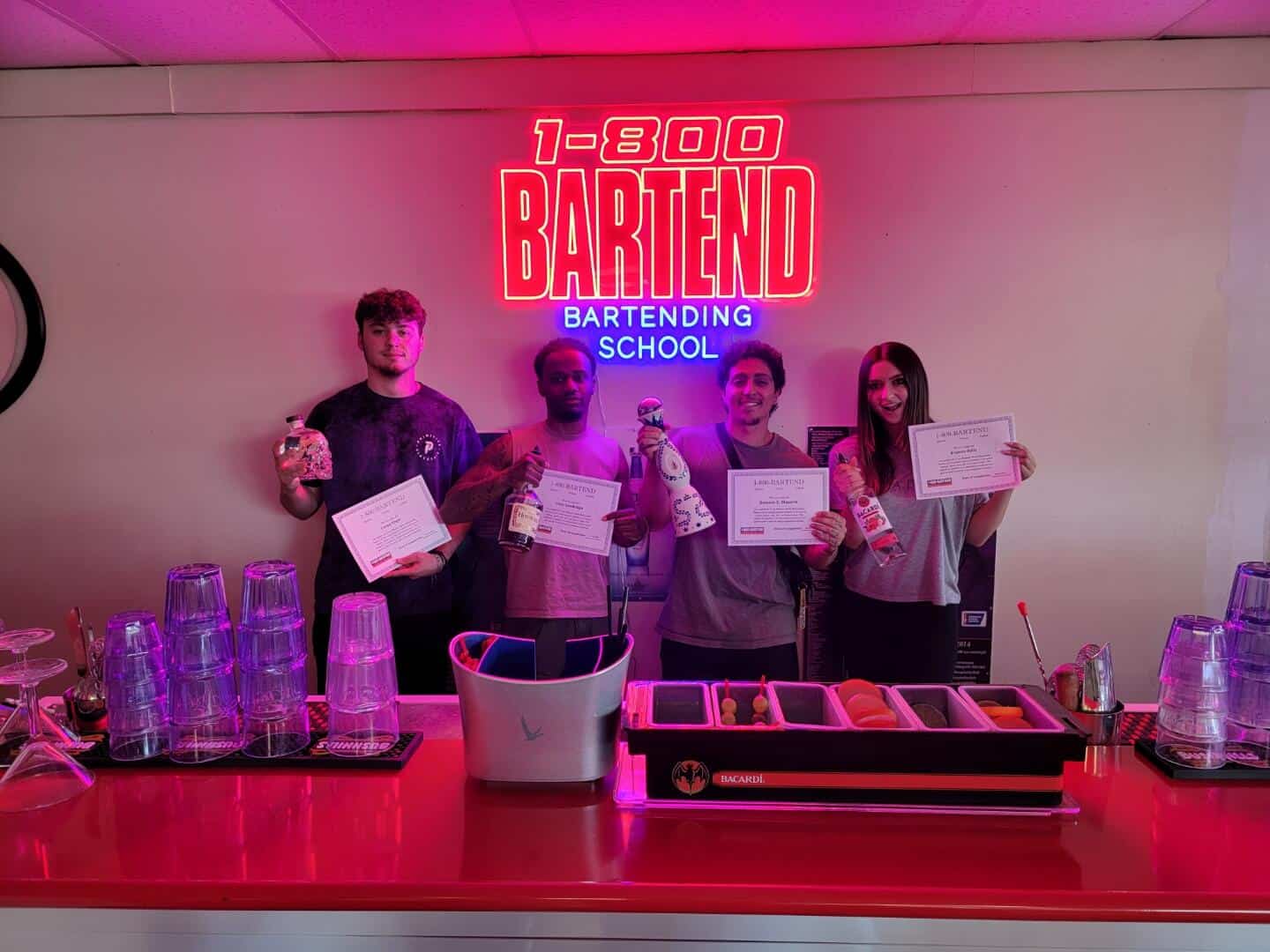
The price difference comes down to what you’re getting. Budget programs teach you drink recipes from a book. Quality programs put you behind a real bar with actual equipment, real bottles, and the kind of pressure situations you’ll face on a Saturday night rush.
Most reputable schools in Nassau County charge $395-$695 for full certification programs. That includes your textbook, bar time, state-approved certification, and usually some form of job placement assistance. Programs advertising prices under $200 often lack proper accreditation or skip the hands-on training that makes you actually hirable.
How long does bartending school take
Time is money, so this matters. Most bartending programs in New York run anywhere from one week to one month, depending on how you structure your schedule.
The intensive route gets you certified in five to seven days if you can commit to full-time hours. You’re talking 6-8 hours daily, fully immersed in bar setup, drink preparation, customer service scenarios, and certification requirements. It’s fast, it’s focused, and it gets you earning quickly.
The flexible route spreads the same content over two to four weeks with evening or weekend classes. You’ll attend a few hours at a time, usually 2-3 sessions per week. This works better if you’re currently employed or managing other responsibilities.
Some schools let you complete training within a full year of enrollment, attending classes as your schedule allows. But here’s the reality—the faster you finish, the faster you start making money. Dragging out a two-week program over six months means you’re leaving tips on the table.
The actual classroom time required for New York certification is typically 40 hours of instruction. How you split those 40 hours between intensive daily sessions or spread-out weekly classes changes your timeline, not your total time investment.
Most students who treat this seriously finish within two weeks. They balance other commitments but prioritize getting certified and getting hired. The ones who stretch it out too long often lose momentum or forget earlier lessons by the time they reach the final exam.
Your certification exam happens once you’ve completed the required hours. Some schools offer testing weekly, others monthly. Factor that into your timeline—finishing your coursework doesn’t mean you’re certified until you pass that final test.
What's included in bartending school tuition
Not all programs are created equal, and this is where people get burned. You need to know exactly what you’re paying for before you hand over money.
Quality bartending programs include your course materials—usually a comprehensive textbook or workbook covering drink recipes, bar terminology, customer service, and alcohol laws. You keep this after graduation, which matters when you need to refresh your memory on a recipe or technique.
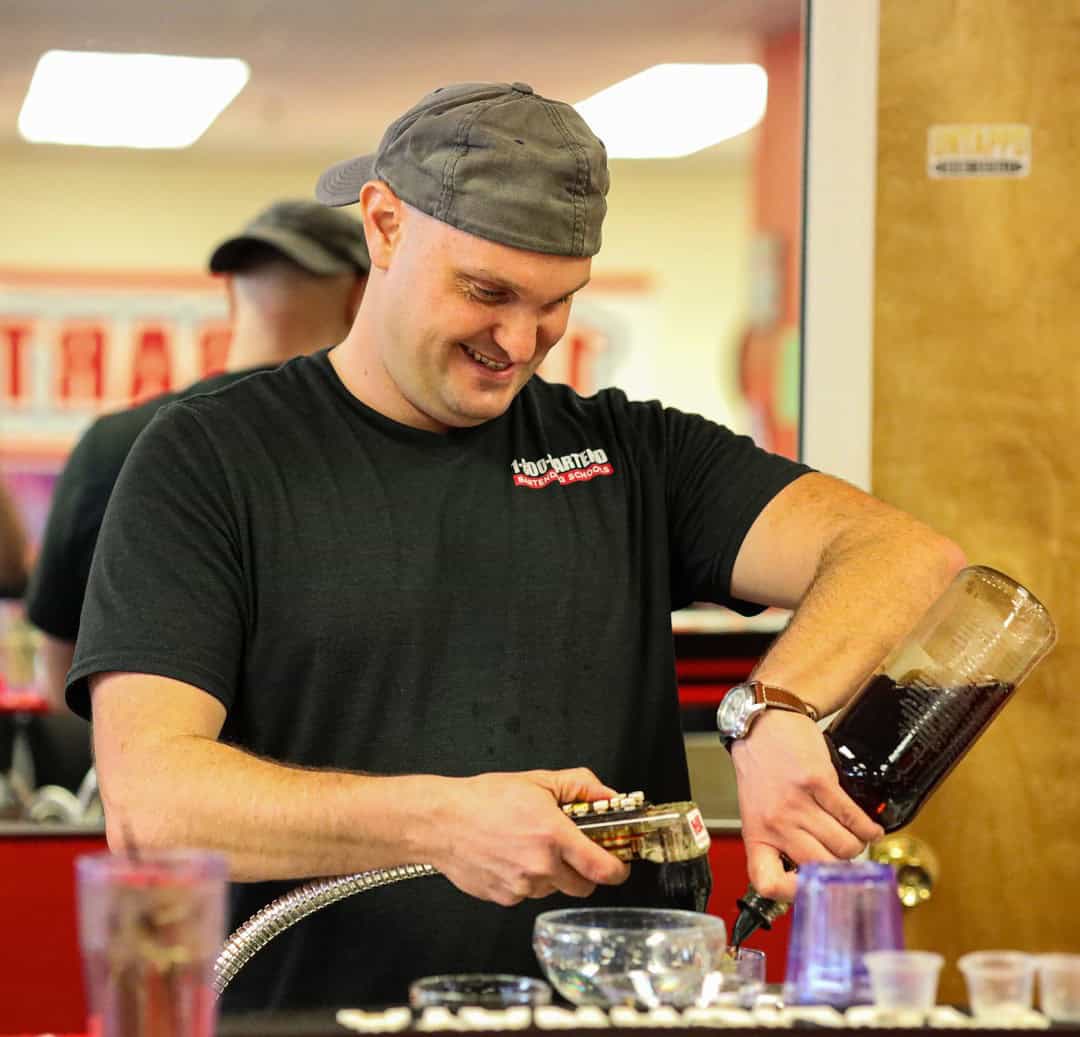
Hands-on bar time is non-negotiable. You should be practicing with real bottles, actual bar tools, working soda guns, and proper glassware. Programs that skip this and just lecture you from a PowerPoint aren’t preparing you for actual bar work.
Your New York State ATAP certification should be included in tuition. This is the Alcohol Training Awareness Program credential that employers look for. If a school charges extra for this on top of tuition, that’s a red flag.
Job placement assistance varies wildly. Some schools maintain active relationships with local bars and restaurants, connecting graduates directly with hiring managers. Others just post job listings on a bulletin board and call it “placement services.” Ask specifically what kind of support you’ll get and whether it’s lifetime access or expires after graduation.
Lifetime refresher courses are a valuable bonus that quality schools offer. The bar industry changes—new drinks trend, techniques evolve, regulations update. Being able to come back for a tune-up session without paying again is worth considering when comparing programs.
Some programs include additional certifications like food handler permits or advanced mixology training. These aren’t required to start working, but they can make you more marketable and justify higher pay rates.
Watch out for hidden fees. Some schools advertise low tuition but then charge separately for textbooks, testing fees, certification processing, or equipment use. Get the total all-in price before you enroll.
Bartending Startup Costs Beyond Training
Training and certification get you qualified. Actually working requires a few more things.
Your ATAP certification in New York costs about $15 if you’re getting it separately from bartending school. Most quality programs include this in tuition, but if you’re going the online-only route or getting certified through a standalone provider, budget for it.
Professional appearance matters in this industry. You’ll need appropriate work clothing—typically all black (black pants, black shirt, black non-slip shoes). Budget $100-200 if you’re starting from scratch. Non-slip shoes specifically designed for bar and restaurant work run $40-80 and they’re worth it. Regular sneakers will have you on your back the first time someone spills a drink.
Some establishments provide uniforms or have specific requirements. Don’t buy a whole wardrobe until you know where you’re working and what they expect.

Bartender Equipment Cost: What You Actually Need
Most bars provide the tools you need during your shift. But having your own professional bar kit makes you more marketable and prepared for private events or catering gigs that pay premium rates.
A basic bartender kit includes a cocktail shaker, jigger (measuring tool), bar spoon, strainer, muddler, channel knife for garnishes, and a wine key (corkscrew/bottle opener combo). You can get a complete starter kit for $30-60 on Amazon. Professional-grade individual tools cost more but last longer.
Here’s what matters—you don’t need the fancy stuff to get hired. Bars have equipment. But when you show up to an interview with your own tools, it signals you’re serious. When a catering company needs an extra bartender for a wedding, having your kit means you’re ready to work anywhere.
If you’re thinking about eventually doing mobile bartending or private events, your equipment costs increase. A portable bar setup, additional shakers, more glassware, coolers, and transport containers can run $500-2,000 depending on how professional you want to look. But that’s not a day-one expense. That’s an investment you make after you’re already earning and ready to expand.
For starting out as an employed bartender, your total equipment cost should be under $100. Anything beyond that is optional or future planning.
The tools that matter most are the ones that fit your hand comfortably and work reliably under pressure. Expensive doesn’t always mean better. A $15 weighted cocktail shaker that seals properly beats a $60 designer piece that leaks every third drink.
Buy quality where it counts—your wine key will get used constantly and cheap ones break. Your jigger needs clear measurement markings that don’t wear off. Your shaker needs to seal without leaking. Everything else is preference.
Some bartenders invest in specialty tools as they develop their style—specific garnish tools, unique glassware for signature drinks, or high-end mixing equipment. That comes later, after you’ve figured out what kind of bartending you’re doing and what tools actually make your work better.
Don’t confuse “nice to have” with “need to start.” You need basics. Everything else can wait until you’re earning.
Hidden costs most people miss
The obvious expenses are easy to plan for. It’s the stuff nobody mentions that catches people off guard.
Transportation to and from work matters more than you think. Bartending shifts often end late—midnight, 2am, sometimes later. If you’re relying on public transportation that stops running or ride-shares that surge price after midnight, factor that into your actual take-home pay. Some bartenders find that late-night Ubers eat into tips more than expected.
Your ATAP certification expires after three years in New York. Renewal isn’t expensive—usually $15-40 depending on the provider—but it’s easy to forget until you’re suddenly non-compliant and unable to work. Mark your calendar now.
Certification renewals for other credentials follow similar timelines. If you get food handler certification, TIPS training, or specialized mixology credentials, each has its own expiration date and renewal fee. Track these or risk scrambling to renew right when you need to work.
Some establishments require additional certifications beyond basic ATAP. You might need food handler permits if you’re working somewhere that serves food. Some upscale venues prefer or require advanced certifications like WSET for wine knowledge or specialized cocktail training. These aren’t universal requirements, but they can pop up depending on where you want to work.
Credit card processing fees if you’re doing private events. When you’re working for yourself rather than an employer, you need a way to accept payments. Square, PayPal, and similar services take 2-3% of each transaction. On a $500 private event, that’s $10-15 off your earnings.
Liability insurance becomes relevant if you’re doing any freelance or mobile bartending. Liquor liability coverage protects you if something goes wrong. This can run a few hundred dollars annually, but it’s not optional if you’re serving alcohol independently rather than as an employee of an insured establishment.
Business licensing and permits if you’re going the mobile bartending or catering route. These vary by county and municipality but can add up quickly. Nassau County has specific requirements for mobile food and beverage services. Budget at least a few hundred dollars for proper licensing if you’re planning to work independently.
The total of these hidden costs varies based on your specific situation, but plan for an extra $200-500 beyond your training and basic equipment to cover the unexpected stuff that comes up in your first year.
Bartending Career Investment: When You'll Break Even
The real question isn’t what bartending costs. It’s how fast you make it back.
Bartenders in New York earn an average of $19.84 per hour plus tips. Tips typically add $150-200 per shift in decent venues. Do the math on a part-time schedule—three shifts per week at $200 in tips is $600 weekly, $2,400 monthly just from gratuities.
If your total investment was $800 for quality training, certification, and basic equipment, you’re breaking even in your first week of work. Even at the lower end—$100 per shift in tips at a slower venue—you’ve covered your investment within two weeks.
Compare that to most career changes. College degrees cost tens of thousands and take years to complete. Trade certifications run thousands of dollars and months of training. Bartending gets you earning quickly with minimal upfront investment.
The ROI gets better over time. Your first job might be at a casual restaurant making $100-150 per shift. Six months of experience opens doors to higher-volume venues, upscale establishments, and private events where $300-500 per shift becomes normal. Your initial $800 investment is now generating an extra $1,000-2,000 monthly compared to your first position.
Smart bartenders stack income streams. You work your regular shifts at an established venue for steady base pay and consistent tips. You pick up private events on your days off for premium rates. You might do a few catering gigs during wedding season. Each of these builds on the same initial training investment.
The break-even timeline assumes you’re actually working. Finishing training and then waiting months to apply for jobs obviously delays your ROI. Schools with strong job placement support get you working faster, which means you’re earning back your investment while other people are still updating their resumes.
Your earning potential grows with experience, venue quality, and the relationships you build. First-year bartenders and ten-year veterans with the same certification don’t make the same money. But they both started with the same initial investment.
Ready to start your bartending career with training that actually prepares you for real bar work? We offer comprehensive programs with hands-on experience, New York State certification, and job placement support that gets you earning quickly. The investment pays for itself faster than you think.