

Summary:
Bartending License Requirements in New York
Here’s what might surprise you about bartending licenses in New York: the state doesn’t actually require one. You can legally serve alcohol at 18 without any special certification.
But before you get too excited, there’s a catch. Most employers absolutely do require certification, and for good reason. The New York State Liquor Authority offers reduced penalties to businesses whose employees hold valid ATAP (Alcohol Training Awareness Program) certification. This creates a massive hiring advantage for certified bartenders.
Think of it this way: two candidates walk into the same interview. One has certification, one doesn’t. Which one do you think gets the job? The certified candidate becomes the obvious choice because they protect the business from liability issues.
What ATAP Certification Actually Covers
ATAP certification isn’t just a piece of paper—it’s practical training that makes you a better, safer bartender. The program covers alcohol awareness, identifying fake IDs, recognizing signs of intoxication, and understanding your legal responsibilities when serving drinks.
You’ll learn how to handle tough situations like cutting off intoxicated customers and dealing with underage drinkers trying to get served. These aren’t theoretical scenarios—they happen regularly in real bars, and knowing how to handle them professionally can save your job and keep your employer out of legal trouble.
The certification also covers New York’s specific alcohol laws, which can be different from other states. For example, you need to understand when alcohol sales must stop, what constitutes proper ID, and how to handle situations where customers become aggressive or unruly.
Most importantly, ATAP training teaches you to balance customer service with responsibility. You’ll learn techniques for saying no to customers without creating confrontation, and how to keep everyone safe while still ensuring people have a good time. This balance is what separates professional bartenders from amateurs.
How Long Does Bartending Certification Take
The timeline for getting certified varies depending on which route you choose, but most ATAP programs can be completed in just a few hours to a few days. Online programs typically take 2-3 hours and let you work at your own pace, while in-person training might be completed in a single day or over a weekend.
However, there’s a big difference between getting certified and getting job-ready. ATAP certification covers the legal requirements, but it doesn’t teach you how to make drinks, handle a busy bar, or provide the kind of service that generates good tips.
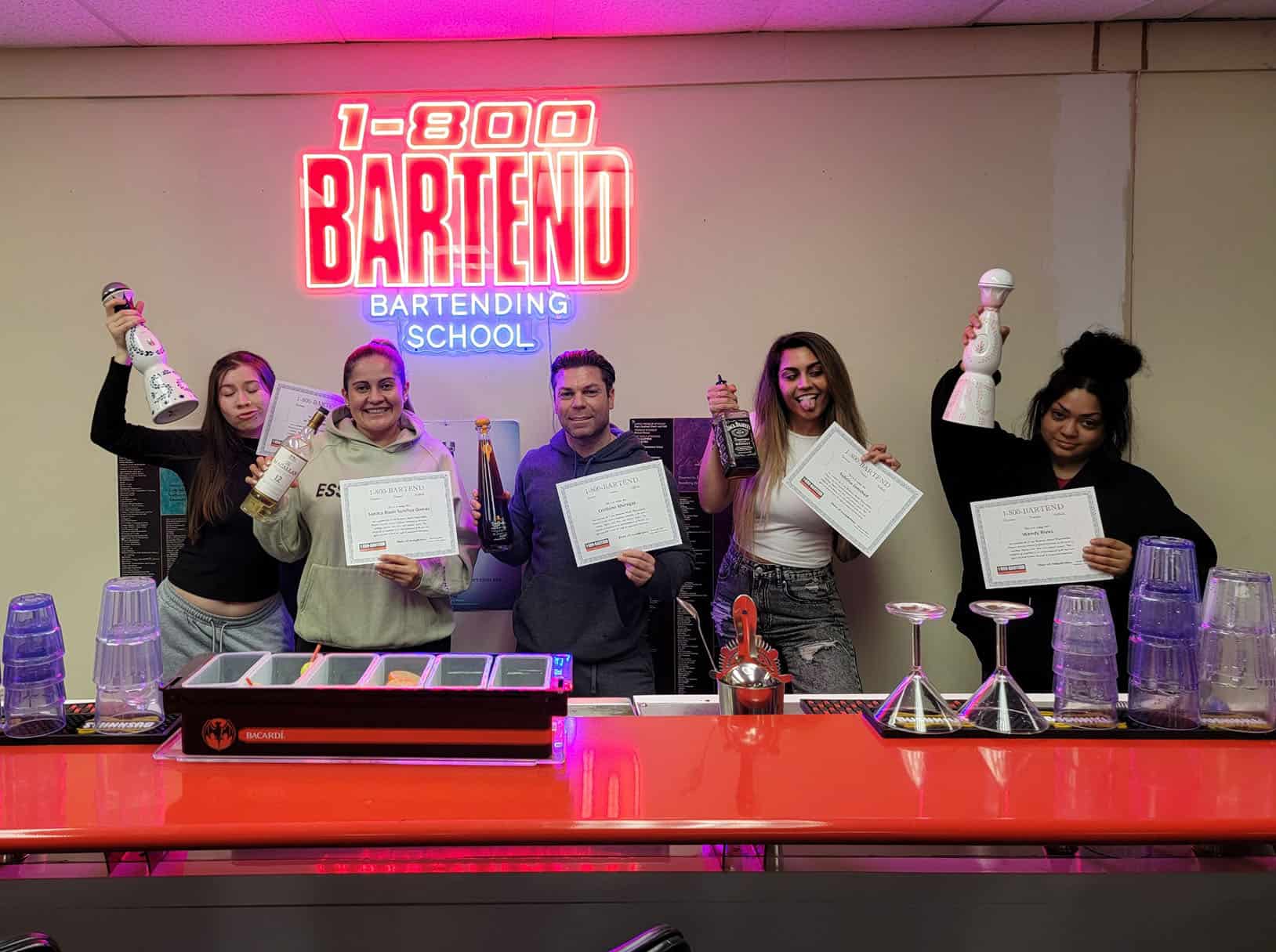
That’s where comprehensive bartending schools come in. Programs like ours at 1-800 Bartend combine ATAP certification with hands-on bartending training, typically completed in one intensive week. You’ll learn drink recipes, bar setup, customer service, and cash handling—everything you need to walk into a bar and start working immediately.
The key advantage of accelerated programs is speed without sacrificing quality. Instead of spending months in evening classes, you can be certified and job-ready in a week. For people looking to make a career change quickly, this timeline can be the difference between starting your new career this month versus next year.
Bartending Jobs and Income in Elmont Area
Let’s talk numbers, because this is probably what you really want to know. Bartenders in the New York area are among the highest-paid in the country, and for good reason—the cost of living is high, but so is the earning potential.
The base hourly wage for bartenders in New York averages around $18-19 per hour, but that’s just the starting point. Tips are where the real money is, and in the Long Island area, bartenders routinely report daily tip earnings of $200 or more. Do the math: that’s potentially $1,400+ per week just in tips, not counting your hourly wage.
Of course, your actual earnings depend on where you work and how good you are at the job. High-end restaurants and busy nightlife spots generate more tips than quiet neighborhood bars. Weekend shifts typically pay better than weekday shifts. And bartenders who provide excellent service consistently out-earn those who just go through the motions.

Types of Bartending Jobs Available Locally
The Elmont area offers diverse opportunities for trained bartenders, each with different earning potential and work environments. Restaurant bartenders typically work in a more structured environment, focusing on wine service and cocktails that complement food. These positions often offer steadier hours and regular customer bases, making them ideal for bartenders who prefer consistency.
Nightclub and bar bartenders work in higher-energy environments with greater tip potential but more demanding physical requirements. You’ll be making drinks quickly for large crowds, especially on weekends. The pace is intense, but the financial rewards can be substantial—especially in popular Long Island nightlife spots.
Event bartenders work weddings, corporate functions, and private parties. This work is often part-time or seasonal, but it pays well and offers flexible scheduling. Many experienced bartenders combine event work with regular bar shifts to maximize their earning potential.
Hotel bartenders work in a hospitality-focused environment, often serving tourists and business travelers. These positions frequently offer benefits like health insurance and paid time off, making them attractive for bartenders seeking more traditional employment structures.
The key is matching your personality and goals to the right environment. Some bartenders thrive in high-energy nightclub settings, while others prefer the steady pace of restaurant work. The good news is that once you’re trained and certified, you can explore different types of establishments to find your best fit.
What Employers Look for in Bartender Candidates
Understanding what employers want can give you a significant advantage in the hiring process. First and foremost, they want to see that ATAP certification—it immediately signals that you understand the legal responsibilities of serving alcohol and won’t create liability issues for their business.
Beyond certification, employers look for candidates who can handle pressure. Bartending involves multitasking in a fast-paced environment while maintaining a positive attitude with customers. They want to see that you can keep your cool when orders are backing up and customers are getting impatient.
Customer service skills are crucial, but not in the way you might think. It’s not about being overly friendly or chatty—it’s about being efficient, accurate, and professional. Employers want bartenders who can read customers, provide appropriate service levels, and handle difficult situations without escalating conflicts.
Physical stamina matters more than people realize. Bartending involves long hours on your feet, lifting cases of beer, reaching for bottles, and moving quickly around a bar. Employers notice candidates who seem physically capable of handling the demands of the job.
Finally, employers value reliability above almost everything else. They need bartenders who show up on time, work their scheduled shifts, and can be counted on during busy periods. Many bar managers say they’d rather hire a reliable bartender with basic skills than a skilled bartender who’s unreliable.
Choosing the Right Bartending School in Elmont
Not all bartending programs are created equal, and choosing the wrong one can waste your time and money. Look for schools that combine ATAP certification with hands-on training, job placement assistance, and ongoing career support.
The best programs use real bar equipment and create realistic training scenarios. You should be practicing on actual soda guns, learning to use real cash registers, and mixing drinks with professional-grade tools. This practical experience makes the transition to your first bartending job much smoother.
We at 1-800 Bartend offer exactly this type of comprehensive training. With over 30 years of experience and locations in Long Island and Queens, we provide programs that get you certified and job-ready in just one week. Our graduates have access to lifetime career support and a network of employer connections that can help you find work quickly after certification.