
Summary:
You’ve probably heard conflicting information about bartending licenses in New York. Some people say you don’t need one. Others insist you do. The truth sits somewhere in the middle, and the confusion costs people jobs every day. New York doesn’t require a statewide bartending license, but walk into most Nassau County bars without ATAP certification and you’ll watch the hiring manager move on to the next candidate. This guide clears up what’s actually required by law, what employers expect, and why the gap between those two things matters more than you think.
NY Bartending License Requirements: State vs Local Rules
New York State doesn’t issue bartending licenses. There’s no statewide requirement that forces you to get certified before serving alcohol. That’s the legal reality.
Here’s what actually happens: most bars, restaurants, and venues in Nassau County require ATAP certification anyway. Their liability insurance carriers demand it. Some city ordinances require it. And even when it’s technically optional, trained bartenders get hired over untrained ones every single time.
The minimum age to bartend in New York is 18, not 21. You need to be legally authorized to work in the United States. If you have felony convictions, you’ll need a Certificate of Relief from Disabilities unless you’re working in a restaurant. That’s the legal checklist. But legal minimum and employable are two different things.
ATAP Certification New York: What It Is and Why Employers Require It
ATAP stands for Alcohol Training Awareness Program. When someone tells you to get a “bartending license” in New York, they’re actually talking about ATAP certification. It’s the credential approved by the New York State Liquor Authority that proves you understand responsible alcohol service.
The program teaches you how to check IDs properly, recognize signs of intoxication, understand dram shop liability, and follow New York’s Alcoholic Beverage Control Law. You learn what happens if you serve a minor or an intoxicated person—both the legal consequences for you personally and the liability for your employer.
ATAP certification is voluntary under state law. The NYSLA strongly recommends it but doesn’t require it. So why do employers treat it like a requirement? Liability protection. If an employee with valid ATAP certification accidentally violates liquor law, the NYSLA may reduce the establishment’s penalty by 25%. For businesses, that’s huge. It’s also why most liability insurance carriers require all staff who handle alcohol to be ATAP certified.
The certification is valid for three years. You can complete the training online or in-person through approved providers. The course typically takes 1-3 hours and costs between $9-$30 depending on the provider. After passing, you get a certificate of completion immediately.
In Nassau County specifically, ATAP certification isn’t just preferred—it’s expected. The nightlife scene is competitive. Employers have their pick of candidates. When they’re choosing between someone with certification and someone without, the decision is easy. The certified bartender understands their legal responsibilities, reduces the venue’s risk, and shows they’re serious about the profession.
Some people think ATAP certification is the same as bartending school. It’s not. ATAP covers legal compliance—what you must know to serve alcohol responsibly. Bartending school teaches professional skills—how to mix drinks efficiently, handle cash, manage inventory, work rush periods, and create the kind of experience that keeps customers coming back. You need both to actually succeed, but employers will ask about ATAP first because it protects their license.
Bartending Permit NYC vs Nassau County: Understanding Local Differences
New York’s alcohol regulations allow specific jurisdictions to set their own requirements. That means what’s required in NYC might differ from what’s required in Nassau County, even though both are in New York State.
New York City doesn’t mandate ATAP certification citywide, but many NYC employers require it anyway. The same pattern holds in Nassau County. No county-level law forces bartenders to get certified, but the market reality is that certified bartenders get hired and uncertified ones don’t.
The distinction between “required by law” and “required to get hired” trips people up constantly. You can legally bartend in Nassau County without ATAP certification. But you’ll be competing against people who took a few hours to get certified, and employers will choose them over you. It’s not about what you can get away with—it’s about what makes you employable.
Nassau County’s bar scene includes everything from high-volume sports bars in Hempstead and Uniondale to upscale dining in Garden City and Manhasset. Wedding venues and country clubs throughout Long Island offer excellent earning potential, especially May through October. These establishments don’t just want bartenders who can pour drinks. They need people who understand cash handling, can work large events efficiently, and won’t create liability issues.
The difference between NYC and Nassau County comes down to market dynamics more than regulations. NYC has a massive hospitality industry with constant turnover. Nassau County’s market is smaller but still offers 353 bartender jobs at any given time. Competition is real. Training matters. Certification matters. The venues that pay well and offer the best tips aren’t hiring people who just meet the legal minimum.
Suffolk County and Queens follow similar patterns. No strict county-wide mandates, but employer expectations are clear. Get ATAP certified at minimum. Better yet, get comprehensive training that includes both legal compliance and professional bartending skills. That’s what separates people who struggle to find work from people who have their pick of positions.
Legal Compliance for New York Bartenders: What You're Actually Responsible For
Understanding your legal responsibilities as a bartender isn’t optional. New York’s dram shop laws hold establishments and employees liable when an intoxicated person causes harm. That liability can follow you personally, not just your employer.
New York General Obligations Law Section 11-101 spells it out. If someone gets intoxicated at your bar and then causes injury or harm because of that intoxication, injured parties can sue both the intoxicated person and the establishment. In some cases, individual bartenders face liability too. ATAP training teaches you how to recognize intoxication, when to stop service, and how to document incidents properly.
The stakes are real. Serving a minor can result in fines, criminal charges, and loss of employment. Serving someone who’s visibly intoxicated creates liability for whatever happens next. These aren’t theoretical risks—they’re situations bartenders face regularly, especially during busy shifts when you’re moving fast and making quick decisions.
Dram Shop Liability and Personal Legal Risk
Dram shop liability means alcohol-serving establishments can be held responsible for damages caused by intoxicated patrons. In New York, this extends beyond just the business. Bartenders, servers, and managers can face personal legal consequences.
Here’s a common scenario: You serve someone who seems fine. They leave, get in their car, cause an accident. If it’s determined they were visibly intoxicated when you served them, you could face civil liability. The injured party’s family can sue you personally, not just your employer. This is why ATAP certification matters—it teaches you to recognize the signs of intoxication before they become obvious.
The legal standard is “visibly intoxicated.” That’s subjective, which makes it tricky. Slurred speech, impaired coordination, aggressive behavior—these are clear signs. But what about someone who’s had six drinks but holds it well? ATAP training covers this. You learn to count drinks, pace service, watch for behavioral changes, and intervene before someone crosses the line.
New York’s Alcoholic Beverage Control Law also prohibits certain practices. You can’t offer unlimited drinks for a fixed price. You can’t run promotions that encourage rapid consumption. You can’t serve someone you know is intoxicated, even if they’re not causing problems yet. Breaking these rules puts your employer’s liquor license at risk and exposes you to personal liability.
Employers with ATAP-certified staff may receive reduced penalties if violations occur. But here’s the key: that protection only applies if the certified employee actually followed their training. Getting the certification isn’t a free pass. You have to apply what you learned. Document incidents. Follow procedures. Take the responsibility seriously.
In Nassau County, where wedding venues and event spaces generate significant business, bartenders often serve large groups quickly. The pressure to keep drinks flowing is real. But so is the liability when something goes wrong. Knowing how to balance speed with responsibility is what separates professional bartenders from people who just pour drinks.
Why Minimum Requirements Don't Equal Career Readiness
Meeting the legal minimum to bartend in New York—being 18 and not having disqualifying convictions—doesn’t mean you’re ready to work behind a bar. Employers in Nassau County know this. That’s why they hire trained bartenders over untrained ones, even when both are legally qualified.
Think about what actually happens during a shift. You’re taking orders from servers and customers simultaneously. You’re mixing multiple drinks at once, handling cash and cards, managing inventory, keeping your area clean, and creating an atmosphere that keeps people ordering. During rush periods, you’re doing all of this at speed while maintaining accuracy and staying friendly.
None of that is covered by ATAP certification alone. ATAP teaches legal compliance. Bartending school teaches professional skills. The gap between those two things is the difference between getting hired and getting passed over.
Nassau County employers want bartenders who can handle the full scope of the job. Cash handling accuracy matters—bars operate on thin margins and cash discrepancies are a fast way to lose a position. Inventory management matters—knowing what’s running low, what to restock, how to rotate product. Customer service matters—reading the room, knowing when someone wants conversation versus being left alone, handling difficult situations without creating drama.
The wedding and event industry in Nassau County is particularly demanding. You might serve 200+ guests in a few hours. You need to work efficiently, maintain quality, and keep the line moving. Employers hiring for these positions aren’t looking for people who just meet the legal minimum. They’re looking for trained professionals who can handle the pressure.
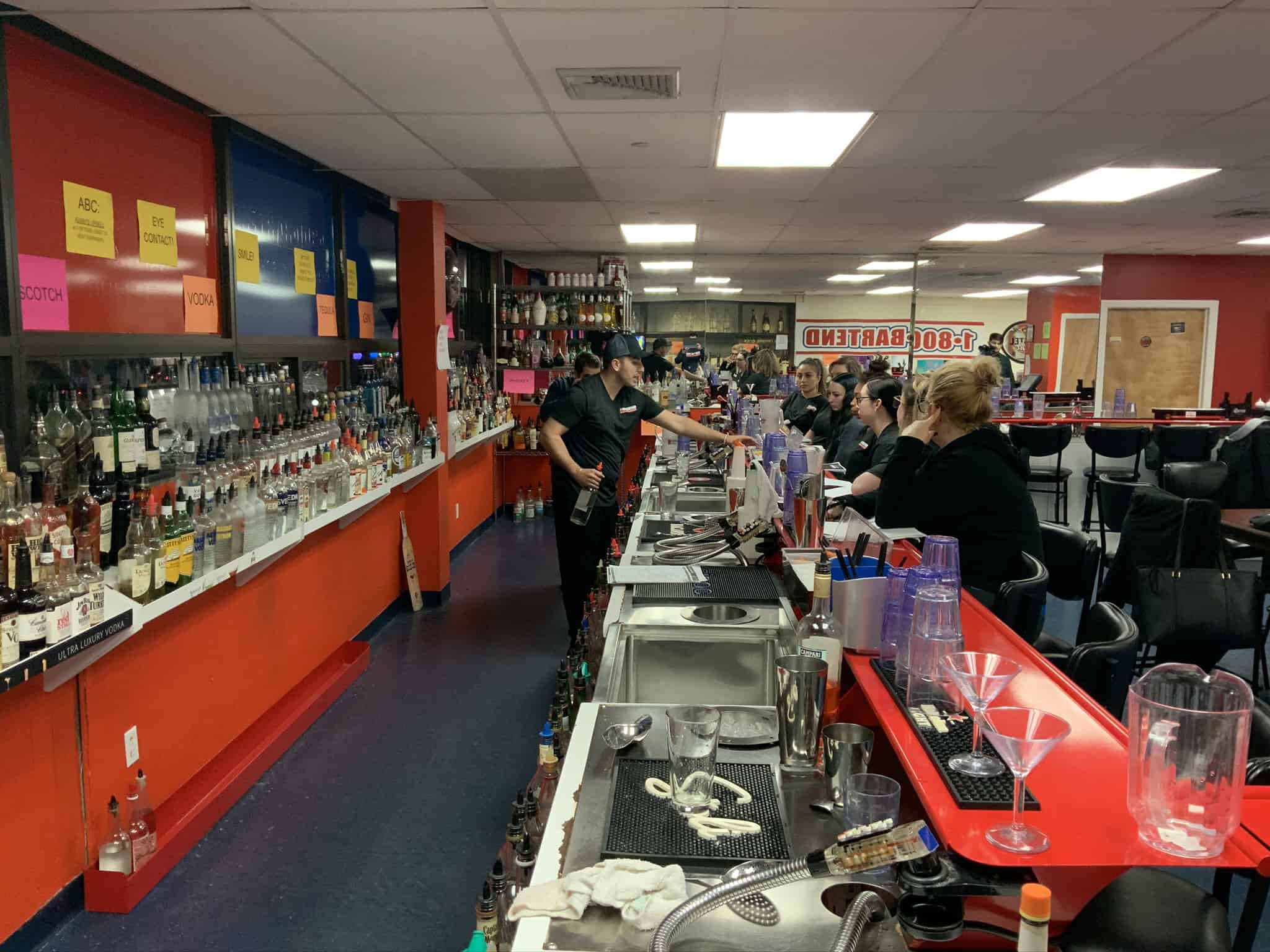
Comprehensive training programs cover all of this. You learn on real bar equipment—soda guns, POS systems, glassware, cash registers. You practice making drinks at speed. You learn proper pouring techniques that maximize profit for the establishment. You understand how to set up a bar, break it down, and maintain it during service. These are the skills that actually get you hired and keep you employed.
The earning potential in Nassau County is strong—median yearly income of $82,169 including tips, similar to NYC but with lower cost of living. But that income goes to bartenders who can perform at a professional level. Meeting the legal minimum gets you in the door for an interview. Professional training gets you the job and the shifts that pay well.
Getting Started as a Bartender in Nassau County, NY
New York’s bartending requirements are simpler than they seem once you understand the difference between legal minimums and market expectations. The state doesn’t require a bartending license. Most employers require ATAP certification. And the bartenders who actually succeed have comprehensive training that goes beyond just legal compliance.
If you’re serious about bartending in Nassau County, get ATAP certified at minimum. Better yet, invest in training that includes both certification and professional skills. Learn on real equipment from people who understand the local market. Build the skills employers actually need—cash handling, inventory management, rush-period efficiency, customer service.
The opportunities are there. Nassau County has 353 bartender jobs available right now. The earning potential is strong. The flexibility is real. But success comes down to showing up with more than just the legal minimum. We offer the hands-on training, ATAP certification, and ongoing support that turns interest into a profitable career.