Summary:
You’ve decided to learn bartending, but you’re probably wondering what actually happens when you walk into that first class. Will you be thrown behind a bar immediately? Do you need to memorize hundreds of drink recipes beforehand?
The reality is much more approachable than you might think. Your first bartending class is designed to ease you into the fundamentals while giving you real, hands-on experience that translates directly to your first job. Here’s exactly what you can expect as you begin your journey from complete beginner to confident bartender.
Your First Day: Equipment and Bar Setup Basics
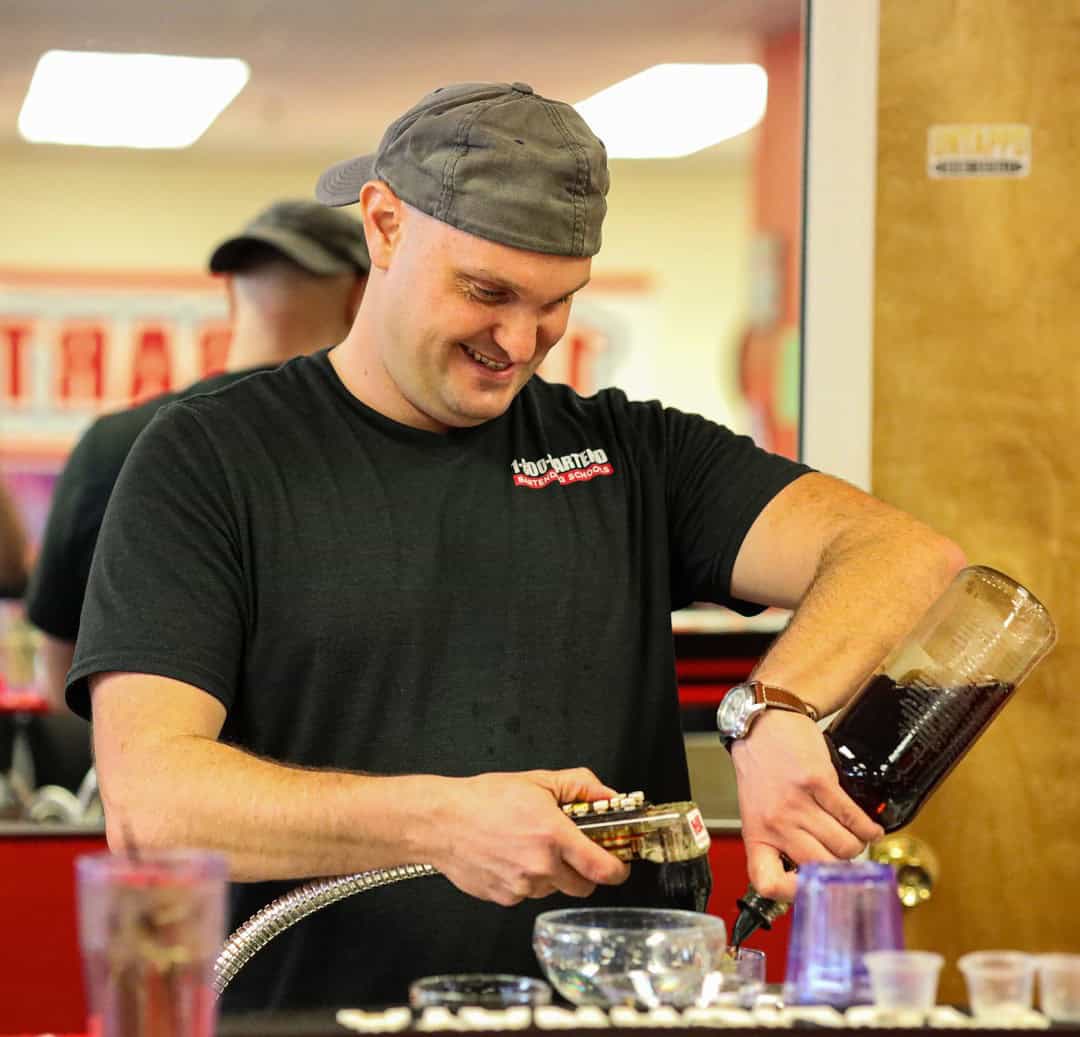
Don’t be surprised if you find yourself donning an apron and standing behind a fully stocked bar sooner than you expected. The first day is all about familiarizing yourself with the equipment and the ingredients. You’ll learn about the different types of glasses, the tools of the trade, and maybe even a little history of bartending to spice things up and juggling (pun intended) the shakers, jiggers, muddlers, and strainers.
We skip the theoretical lectures and get you working with actual equipment immediately. You’ll handle the same soda guns, glassware, and cash registers you’ll use at work. This hands-on approach means you’re building muscle memory and confidence from minute one.
Bartending has a significant learning curve for beginners, just like most other jobs in the food service industry. The work is fast-paced and you won’t have time to think, so you must prepare yourself as much as possible before your first day on the job.
Learning Essential Bar Tools and Equipment
Your instructor will walk you through each piece of equipment systematically. You’ll learn the difference between a jigger and a shot glass, how to properly hold and use a cocktail shaker, and why certain glasses are designed for specific drinks.
You’ll be exposed to basic knowledge about different types of bar equipment, setup, glassware, and cleaning. If you’ve never tried to change a keg, well, you’ll learn at our bartending school. The goal isn’t to overwhelm you with information, but to make sure you can confidently navigate any bar setup.
Most students are surprised by how much technique goes into something as simple as pouring. You’ll practice free pouring, learn proper measuring techniques, and understand why consistency matters for both taste and profit margins. If you’re regularly under or overpouring, you’ll use up alcohol inventory at a different rate than expected. This affects future supplies – you might run out of a popular drink on a busy night or end up with inconvenient surpluses. Since drink prices are calculated based on standard volume, over- or underpouring can also affect the business’s bottom line. For all these reasons, it’s important for new bartenders to measure as they pour, even if it takes a little longer.
The beauty of starting with real equipment is that you’re not just learning concepts—you’re developing the physical skills and confidence that separate trained bartenders from those who try to wing it. By the end of your first session, you’ll understand why employers prefer candidates with formal training.
Understanding Different Types of Alcohol and Spirits
Your bartending classes will also cover the types of spirits and their origins. Expect to learn about everything from vodka and gin to whiskey and rum. Each spirit has a story, and understanding these will make you a more knowledgeable and engaging bartender. Plus, it’s a great way to impress your future patrons!
You won’t just memorize names and brands—you’ll learn how different spirits behave in cocktails, which ones pair well together, and how to make recommendations based on customer preferences. This knowledge becomes crucial when customers ask for something “light and refreshing” or “strong and smoky” without naming a specific drink.
Of course, bartenders should be familiar with the products they work with. Learning about whiskies, beer styles, wine varietals, and cocktails is essential. A bartender will often be asked for recommendations, required to create cocktails on the fly, or offer food pairing choices for wine and beer. Knowing your drinks is important, and there are countless resources you can utilize to do so.
Your instructor will likely have you taste different spirits (in small amounts) to understand their flavor profiles. This isn’t about drinking on the job—it’s about developing your palate so you can speak confidently about what you’re serving. You’ll learn to identify the difference between bourbon and rye whiskey, understand why gin works in a martini, and recognize when a wine has gone bad.
Hands-On Cocktail Making and Recipe Training
Now for the moment you’ve been waiting for: mixology class! This is where you’ll put your newfound knowledge to the test and create your first cocktails. You might start with classics like the Martini or Mojito, learning the delicate balance of flavors and the importance of precision in every pour.
Instead of trying to learn all the complicated drink variations at once, begin by making and mastering the classics. Every guide that goes over bartending for beginners will have these staples. You’ll start with foundational drinks that teach you essential techniques—shaking, stirring, building, and layering.

Mastering Classic Cocktails and Techniques
Your first cocktails will be chosen strategically to teach you fundamental skills. A classic daiquiri teaches you about balance between sweet, sour, and strong. A martini shows you the importance of proper stirring technique and temperature control. An Old Fashioned demonstrates muddling and the art of enhancing rather than masking the base spirit.
Get ready to unleash your inner artist as you experiment with different ingredients and techniques. Your instructors will guide you through the art of tasting, helping you develop your palate and understand the nuances of each cocktail. You’ll learn to taste for balance—is it too sweet, too sour, or too strong? How do you fix it?
The goal isn’t to memorize every recipe perfectly on day one. Instead, you’re learning the principles that allow you to understand why recipes work and how to adapt them. Try to learn the recipes for the classic cocktails ahead of time, and try to learn your venue’s cocktail list as soon as possible! But don’t stress too much if your memory lets you down a bit. There’s nothing wrong with consulting a recipe. A customer would rather you do that than mess up their order!
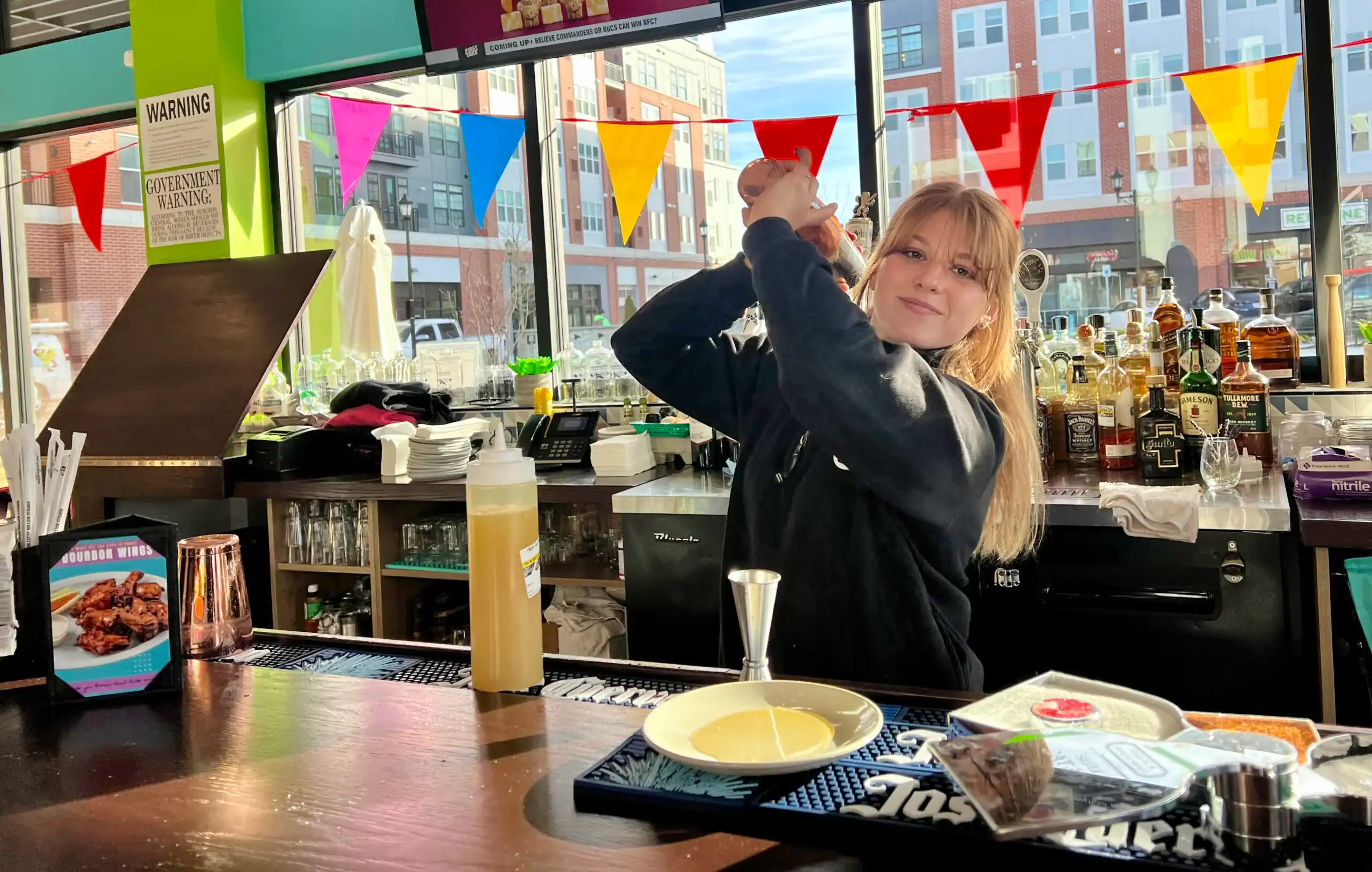
Most importantly, you’ll practice the physical movements until they become natural. Shaking a cocktail properly requires technique—too little and ingredients won’t integrate, too much and you’ll over-dilute. These are skills that only come with hands-on practice under expert guidance.
Learning Customer Service and Professional Standards
As you progress through your first week, you’ll begin to navigate our bartender course curriculum. This is where you’ll delve into more detailed topics like alcohol laws, customer service, and the responsibilities of a licensed bartender. It’s not just about making drinks; it’s about understanding the legal and ethical aspects of bartending too.
Customer service in bartending goes far beyond taking orders and serving drinks. You’ll learn how to read a room, manage difficult situations, and create an atmosphere where people want to return. Always look your guests in the eyes and smile. Try to learn and use your guests’ names. These simple techniques can dramatically increase your tips and job satisfaction.
As a new bartender, it is easy to fall into the trap of spending too much time talking to a single customer. Often customers don’t realize they are holding you back, and it will cause you to fall behind in your duties. Simply tell a guest that you need to do something and you will be right back. If that doesn’t work, you need to break the conversation.
You’ll also learn about responsible alcohol service—how to recognize signs of intoxication, when to cut someone off, and how to handle these situations diplomatically. Getting your bartending license is an essential step in your journey. During your first week, you’ll get an overview of the licensing process. This includes understanding the requirements and the steps you need to take to become a licensed bartender in New York.
Setting Yourself Up for Success After Your First Class
When you find a bar willing to give you a shot, take the opportunity seriously. Show up on time, listen to all instructions, and do your best. They won’t expect you to know how to do everything right away, but they’ll want to see that you’re putting an effort into your bartender training.
Your first bartending class is just the beginning of your journey, but it’s designed to give you a solid foundation and the confidence to continue learning. Bartending is an amazing skill to have, but it can often take a bit of time to learn. Keep your eyes open and stay busy. As you get more comfortable, you will begin to get into a groove.
The most successful students leave their first class with realistic expectations and a clear plan for improvement. Remember that we provide ongoing support, job placement assistance, and lifetime refresher courses to help you succeed throughout your career.