
Summary:
You’re watching industries shrink, layoffs mount, and job security evaporate across traditional careers. Meanwhile, one profession is not just surviving but thriving through economic uncertainty. There are about 745,610 Bartenders working in the U.S. as of May 2024. That’s the highest number ever recorded for the profession in recent years.
In Suffolk County, NY, Nassau County, NY, and Queens, NY, bartending has become the career move everyone’s talking about. Here’s why smart professionals are trading their corporate desks for bar tops, and how you can join them in less time than you think.
Why Bartending Is Recession-Proof in 2025
When it comes to “recession-proof jobs,” the strongest one will be “closest to essential goods and services” like health care and groceries, says economist Cory Stahle. But there’s another category experts are watching: hospitality services that provide comfort during tough times.
People don’t stop going out when money gets tight. They change where they go and how often, but the need for social connection and stress relief actually increases during economic downturns.
The revenue for bars and nightclubs in the U.S. is projected to reach $38 billion in 2025, at a compound annual growth rate (CAGR) of 12.2% over the past five years. You’re looking at one of the fastest-growing job markets in New York. Suffolk County, Nassau County, and Queens offer incredible opportunities for trained bartenders. With over 190 active job openings and employers desperately seeking certified professionals, the timing couldn’t be better to make your move.

The Numbers Don't Lie: Bartending Job Growth in Long Island
While other industries are contracting, bartending is experiencing unprecedented growth. Employment of bartenders is projected to grow 9 percent from 2023 to 2033, much faster than the average for all occupations. About 134,600 openings for bartenders are projected each year, on average, over the decade.
In the New York metro area specifically, the numbers are even more impressive. Bartenders saw remarkable wage growth of 37.95% from 2020-2024, taking average annual income to $39,880. Employment in bartender roles surged 53.19% in the same period, reflecting heightened demand in NYC’s vibrant nightlife and hospitality scene. The positive outlook projects continued 9% growth in bartender positions from 2023 through 2033.
This isn’t just about filling empty positions. In Suffolk County alone, you’ll find 190+ active job listings right now. But here’s what the job boards won’t tell you: most of these positions require ATAP certification. That’s where proper training becomes your competitive advantage.
The seasonal nature of Long Island’s hospitality industry creates even more opportunities. Summer venues from the Hamptons to Montauk need experienced, certified staff who can hit the ground running when tourist season peaks. High-end establishments like those in the Hamptons or Manhattan-adjacent areas in Queens aren’t just paying better—they’re exclusively hiring certified bartenders. We’re talking about positions that start at $20+ per hour plus substantial tips, compared to unlicensed positions that might offer minimum wage with unpredictable tip pools.
What Makes This Career Truly Recession-Resistant
Unlike many traditional careers, bartending offers multiple layers of financial security. The combination of hourly wages and tips creates income streams that often increase during economic stress, as people seek affordable ways to socialize and unwind.
With demand for immersive cocktail experiences and mixology-driven concepts set to grow in 2025, innovation is key. Mocktails and non-alcoholic pairings are now essential year-round, not just for “dry January.” Speakeasies, flair bartending, and storytelling are driving the trend, while bars push creativity with unique ingredients, techniques, and mixology classes to engage customers.
The industry has also proven remarkably adaptable. During economic downturns, bars and restaurants pivot to events, private dining, and specialized services to maintain revenue. A standout approach proving its worth is the strategic integration of events and group reservations, consistently delivering strong returns on investment. In times of economic uncertainty, predictability is gold. Set menus for events allow for more accurate forecasting of revenue, food orders, and staffing needs, making your business more resilient against market fluctuations.
This adaptability translates directly to job security for skilled bartenders. When establishments need to pivot their business model, they rely on experienced staff who can handle everything from intimate wine tastings to high-volume events. Your certification and training become insurance against economic volatility.
The Certification Advantage: Why ATAP Training Is Non-Negotiable
Most of these positions require ATAP certification. That’s New York’s Alcohol Training Awareness Program, and it’s basically your ticket into the industry. Without it, you’re competing for scraps. With it, you’re suddenly qualified for the good jobs—the ones at busy restaurants, trendy bars, and event venues where tips actually add up.
The reality in Suffolk County, Nassau County, and Queens is simple: bars and restaurants want certified bartenders. They’re not just looking for someone who can pour drinks—they need professionals who understand responsible alcohol service, can handle high-pressure situations, and won’t create liability issues. Your ATAP certification proves you understand New York’s alcohol laws, can spot fake IDs, and know how to handle intoxicated customers safely.
The certification requirement isn’t bureaucratic red tape. It’s business necessity that creates artificial scarcity in the job market, working in your favor.

How Proper Training Accelerates Your Career Timeline
The difference between certified and uncertified bartenders isn’t just about getting hired. It’s about where you get hired and how quickly you advance. Certified bartenders typically earn 15-25% higher wages than their uncertified counterparts, with many landing positions at upscale establishments that require formal training verification.
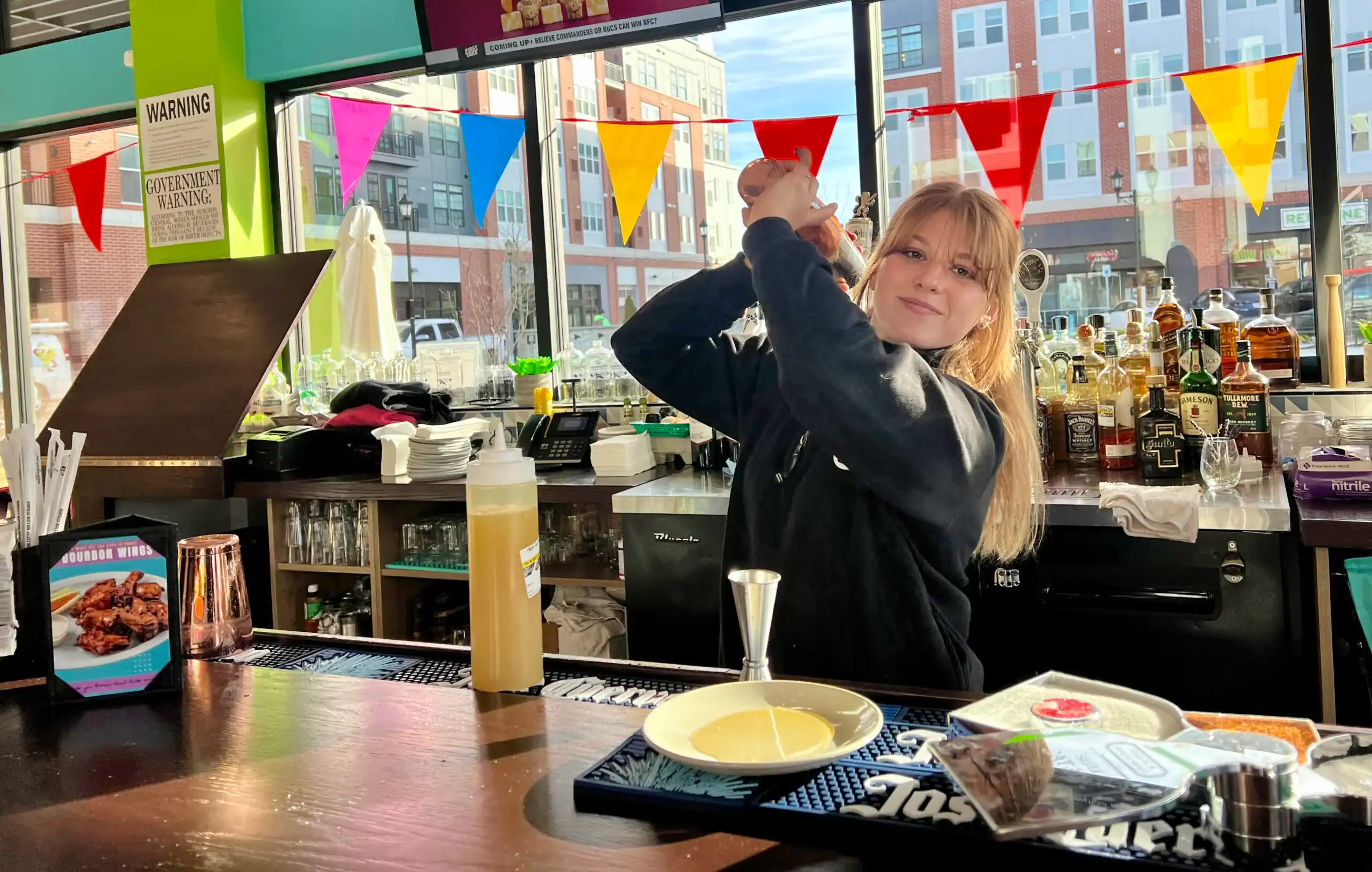
Our bartending program puts you behind a real bar setup from day one. You’ll master drink recipes, handle actual equipment, and practice customer service scenarios that mirror what you’ll face in Nassau, Suffolk, and Queens establishments. This comprehensive approach is why our graduates get promoted faster and earn better tips than bartenders who learned on the job.
The hands-on training approach matters because employers can tell the difference immediately. Quality bartending schools use the same soda guns, cash registers, and glassware you’ll encounter at actual establishments. This matters because your first shift shouldn’t be the first time you’ve operated a POS system or changed a keg. Professional training covers the details that amateur programs skip: how to set up your station for maximum efficiency, proper lifting techniques to prevent injury, and time management strategies for handling multiple orders simultaneously.
When you walk into an interview with professional training and ATAP certification, you’re not just another candidate. You’re someone who took their career seriously enough to invest in proper preparation. That distinction opens doors to the establishments where you actually want to work.
The Speed Factor: From Training to Paycheck in One Week
Traditional career changes take months or years. Bartending certification takes one week. You can get certified and job-ready in as little as one week. Not one semester. Not one year. One week.
Most graduates start working within days of completing their certification. Our job placement network includes restaurants, bars, and catering companies across Nassau, Suffolk, and Queens that actively hire our graduates. We maintain relationships with hiring managers who trust our training quality.
This speed isn’t about cutting corners. It’s about focused, intensive training that eliminates the fluff and concentrates on exactly what you need to succeed. Our 1-day intensive program is perfect for working professionals who need certification quickly. We also offer flexible scheduling for our 5-day program, including evening and weekend options. Many students complete their training while working their current job, then transition to bartending once they’re certified and have job offers lined up.
The rapid timeline works because bartending skills are practical and immediately applicable. Unlike academic programs that mix theory with application over extended periods, professional bartending training focuses entirely on job-ready skills. You learn what you need, practice until it’s automatic, then start earning.
Your Next Move: Getting Started in Suffolk, Nassau, or Queens
The window for recession-proof career moves is narrowing as more people recognize the opportunity. The bartending job market in Suffolk County, Nassau County, and Queens is strong and growing. With proper training and ATAP certification, you can be working within weeks, not months. The key is choosing comprehensive training that prepares you for real-world demands while providing the certifications employers require.
Economic uncertainty makes career security more valuable than ever. While other industries shed jobs and freeze hiring, bartending continues expanding. The combination of growing demand, certification requirements, and rapid training timeline creates a unique opportunity for career transition.
All graduates receive lifetime access to refresher courses at no additional cost. The bar industry evolves constantly with new drink trends, equipment, and regulations. Our refresher sessions keep you current and confident throughout your career. You can also retake any portion of the original course if you want to brush up on specific skills or if you’re returning to bartending after time away. Your investment in professional bartending training isn’t just about getting your first job—it’s about building a recession-proof career that grows with you.