
Summary:
What Makes Quality Bartending Classes in Nassau County
Real bar setups matter more than textbook theory. You need to practice with actual soda guns, glassware, and cash registers—not watch someone else do it. Quality instruction means learning from experienced bartenders who teach you the correct ways to pour drinks, explain why it’s done that way, and give you insight into what to expect in the real world.
The best programs ensure you learn all the drinks required to effectively handle a commercial bar, teach you to pour accurately, multi-task, handle cash, and up-sell to boost profit for the bars that employ you. Look for Bartending schools that offer flexible schedules, from one-week courses to longer programs, help graduates find jobs, and provide certifications that many bars and restaurants require.

Why ATAP Certification Matters for Nassau County Bartenders
ATAP certification is especially important if you’re looking to work in Nassau County or Queens, where the nightlife scene is always buzzing. Many employers prefer or require their bartenders to have ATAP training so they can be sure they’re following the rules. This isn’t just a nice-to-have credential—it’s often what separates you from other candidates.
Here’s what most people get wrong: A “Bartending License” is not required to be a bartender in NYC, nor does such a thing actually exist. However, some cities require bartenders to complete an alcohol awareness class. That’s where ATAP comes in. In New York, A.T.A.P. certification is essential for any serious bartender. It shows employers you’re committed to responsible alcohol service and have the knowledge to back it up.
Our program covers topics ranging from alcohol awareness to customer interactions, preparing you for the A.T.A.P. exam. With proper instruction and extensive curriculum, you’ll be well-prepared to ace the exam and become a licensed, in-demand bartender. This certification validates that you understand New York State alcohol laws, can identify signs of intoxication, and know how to handle difficult situations professionally.
The reality is simple: ATAP certification lets you keep the good times rolling safely and responsibly. When you walk into a job interview with this credential, you’re showing potential employers that you take the responsibility seriously and understand the legal requirements of serving alcohol in New York.
Hands-On Training vs. Theory: What Actually Prepares You for Real Bars
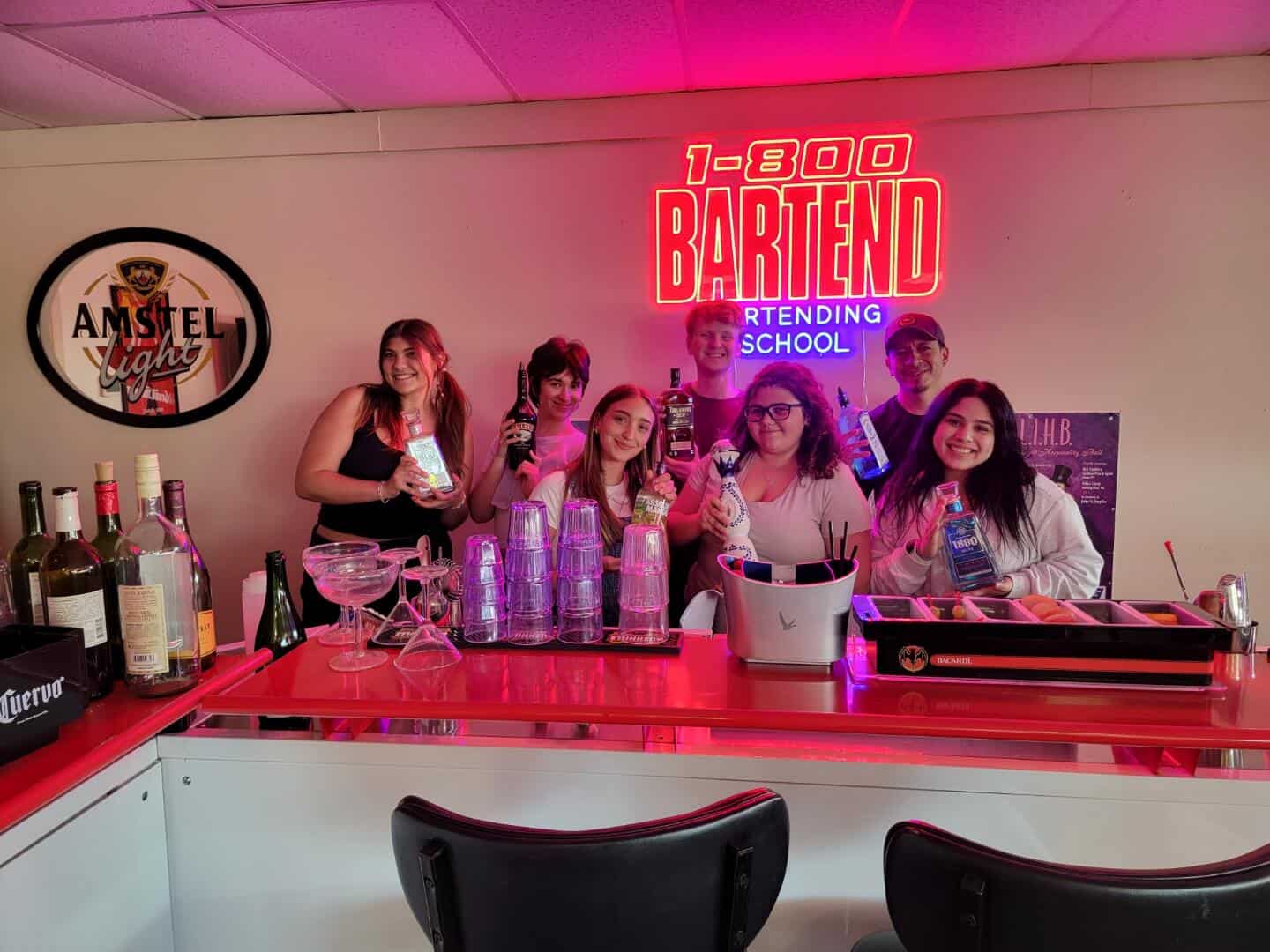
Our bartending school classrooms are set up like real bars. This ensures that graduates know where things are and how to find them when they start work after graduating. Our teachers have all worked, or continue working at busy bars, and will teach you the tricks of the trade you need to know to hit the ground running after graduation.
You don’t need another classroom lecture. You need to be shaking, stirring, and mastering techniques from day one. Students learn a wide variety of drink recipes with practical hands-on instruction, with complete access to on-site ‘classrooms’ which are fully equipped real-world wet bar environments. This means working with the same equipment you’ll use in actual bars—not plastic bottles and pretend scenarios.
Real bartending means knowing a wide range of drink recipes, mixing drinks quickly, avoiding spillage or overpouring, being personable with customers at the bar, and working well with waiters, waitresses, and kitchen staff to ensure prompt service. You can’t learn this from a book or online video.
The difference becomes obvious when you start working. Beyond mixing and serving drinks, bartenders stock and prepare beverage garnishes, maintain ice, glasses, and other bar supplies, wash glassware and utensils, serve food to customers at the bar, and maintain inventory of liquor, mixers, and other supplies. You’ll collect payment from customers, monitor customers for intoxication, determine when to deny service, and sometimes arrange for safe transportation.
This is why hands-on training in a real bar environment matters so much. When you’re behind an actual bar for the first time, you want it to feel familiar—not like you’re seeing everything for the first time.
Bartending Job Market and Opportunities in Nassau County
There are 190 bartender jobs available in Long Island, NY, and employment of bartenders is projected to grow 6 percent from 2024 to 2034, faster than the average for all occupations, with about 129,600 openings projected each year. The numbers tell a clear story: this isn’t a shrinking field.
The average salary for a bartender is $41,362 per year in Queens, NY, though this figure can vary based on experience, the type of establishment, and the specific neighborhood. The salary range can be quite broad—some bartenders may earn as little as $25,000 per year, while others can earn upwards of $67,600 annually. Factors that influence these earnings include the popularity of the bar, the bartender’s skill level, and the ability to attract and retain customers. Bartenders who work in high-end establishments or during peak hours often see higher earnings.
Where Nassau County Bartenders Actually Work
Whether you dream of working in a trendy cocktail lounge in Garden City, a bustling pub in Rockville Centre, or a high-energy club in Long Beach, proper bartending classes will equip you with the skills and confidence to succeed. The variety of venues in Nassau County means opportunities for different personality types and career goals.
Bartenders work at restaurants, hotels, and other food service and drinking establishments. During busy hours, they are under pressure to serve customers quickly and efficiently. They often work late evenings, on weekends, and on holidays. Part-time work is common, and schedules may vary. This flexibility appeals to many people—students, parents, or anyone who needs to work around other commitments.
One of the significant benefits of working in a diverse and expansive market like New York is the multitude of options available. You are highly likely to discover the ideal bar that suits your preferences. From upscale restaurants to neighborhood sports bars, from hotel lounges to catering companies, Nassau County offers venues that match different working styles and income goals.
Bartenders in Queens often work in busy environments, serving a diverse clientele. This dynamic work setting can lead to opportunities for tips and additional income. The key is getting the training and connections that help you access the better opportunities rather than settling for whatever’s available.
Job Placement Reality: What Actually Helps You Get Hired
Here’s the honest truth about job placement: many people think “bartending schools are a waste of time” and “the job placement is sketchy”. They’re not entirely wrong—if you choose the wrong program. The difference lies in schools that have actual industry connections versus those that just hand you a certificate and wish you luck.
We have relationships with thousands of bars and establishments. Our vast network ensures graduates have the most job opportunities compared to graduates of other schools. Direct relationships with thousands of bars, clubs, restaurants, and hotels give us a unique advantage—the ability to offer you the best bartending job opportunities.
We map out your path to a bartending job, making your career launch simple, rewarding, and stress-free. You get placed in top locations—from trendy lounges to neighborhood favorites. Full-Time Program graduates receive free job support and coaching, with access to job listings exclusive to alumni.
We offer free, lifetime job placement service forever, no matter where you go. Our database regularly contains hundreds of job leads and is updated daily, with lifetime access to job placement teams who assist you to find great bartending jobs. This ongoing support matters more than the initial training because your career doesn’t end when you graduate.
While bartenders typically don’t need related work experience to enter the occupation, some employers prefer or require candidates to have food-service experience. Others start as bartender helpers and progress to become bartenders as they learn basic mixing procedures and recipes. We bridge this gap by providing both the skills training and the industry connections that help you bypass the typical entry-level struggles.
Getting Started with Professional Bartending Training in Nassau County
Mixology in 2025 is poised for thrilling evolution, driven by trends that emphasize creativity, sustainability, and innovation. As the beverage industry embraces sustainability and explores health-conscious options, consumers are seeking more personalized and immersive experiences. This means better opportunities for skilled bartenders who understand both classic techniques and modern trends.
Starting a bartending career should be exciting, not overwhelming. We are committed to helping you find the right opportunities, with a network of industry connections, exclusive job openings, and free placement support. You won’t just learn the ropes—you’ll join a network that has your back and gets you paid, making the job placement process as simple as possible so you can focus on getting behind the bar and getting started.
The choice isn’t whether bartending is right for you—it’s whether you’ll get the training and support that actually leads to success. With the right program, you can be working behind a bar in Nassau County within weeks, not months. We offer the hands-on training, industry certification, and job placement support that turns career change from a dream into reality.