
Summary:
What Makes a Quality Bartending Course in Suffolk County, NY
A solid bartending course should prepare you for actual bar work, not just teach you to memorize drink recipes. The best programs combine hands-on training with real equipment, industry certifications, and job placement support.
In Suffolk County, Nassau County, and Queens, employers often look for candidates with ATAP certification and practical experience. You want a program that gives you both the technical skills and the confidence to handle a busy Friday night shift from day one.
The difference between a good program and a great one often comes down to three things: real-world training environments, experienced instructors who’ve actually worked in the industry, and connections that help you land your first job.

Hands-On Training vs. Classroom Theory
Here’s where many bartending schools fall short—they focus too much on theory and not enough on practice. You can memorize every cocktail recipe in the book, but if you’ve never worked with real bar equipment under pressure, you’re going to struggle on your first shift.
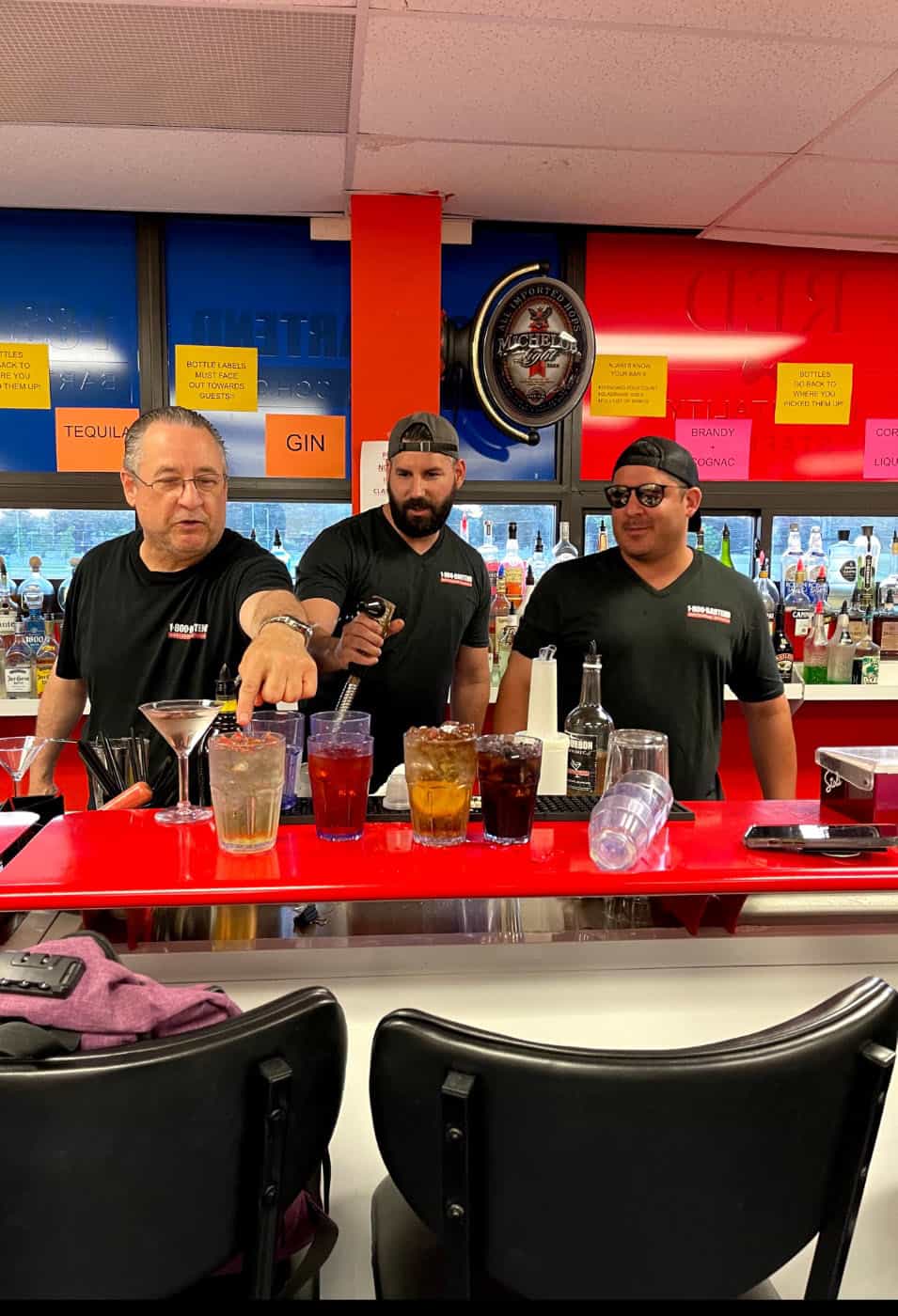
Quality programs use actual bar setups with working soda guns, real glassware, and cash registers. You should be practicing on the same equipment you’ll use in an actual bar, not watching demonstrations or working with toy equipment. This hands-on approach helps you develop muscle memory and confidence that classroom learning simply can’t provide.
The best instructors are those who’ve spent years behind actual bars, not just in classrooms. They understand the reality of bartending—the rush of a Saturday night, dealing with difficult customers, and the physical demands of the job. These instructors can teach you shortcuts, efficiency techniques, and real-world problem-solving skills that only come from experience.
When evaluating programs, ask about their equipment and instructor backgrounds. If they can’t show you real bar setups or if their instructors have never worked in busy establishments, keep looking. You want training that prepares you for the real world, not just helps you pass a test.
ATAP Certification and New York Requirements
In New York, particularly in Suffolk County, Nassau County, and Queens, many employers prefer or require ATAP (Alcohol Training Awareness Program) certification. This isn’t just a piece of paper—it demonstrates that you understand responsible alcohol service, can identify signs of intoxication, and know the legal requirements for serving alcohol.
ATAP certification covers crucial topics like checking IDs, recognizing fake identification, understanding liability issues, and knowing when to refuse service. These skills protect both you and your employer from legal problems and create a safer environment for everyone.
Some bartending schools treat ATAP certification as an afterthought or charge extra for it. Quality programs include it as part of their core curriculum because they understand its importance in the New York market. The certification is valid for three years, after which you’ll need to renew it.
Beyond the legal requirements, ATAP training teaches you professional service standards that separate good bartenders from great ones. Employers in Nassau County and Queens specifically look for this certification because it shows you’re serious about the profession and understand the responsibilities that come with serving alcohol.
Career Support and Job Placement Reality Check
Many bartending schools promise job placement, but few deliver meaningful support. Real career assistance goes beyond just giving you a list of bars to contact—it includes resume help, interview preparation, and ongoing support as you build your career.
The Long Island bartending market is competitive, with hundreds of establishments across Suffolk County, Nassau County, and Queens. Having connections in the industry can make the difference between landing interviews and having your applications ignored.
Look for programs that offer lifetime job placement support, not just help finding your first job. The bartending industry has high turnover, and you may change positions several times as you advance your career.
Understanding the Local Job Market
Suffolk County, Nassau County, and Queens offer diverse bartending opportunities, from casual neighborhood bars to upscale restaurants and seasonal venues. Each type of establishment has different requirements and expectations for their bartenders.
Seasonal work is particularly common on Long Island, with many venues ramping up during summer months and scaling back in winter. Understanding these patterns can help you plan your career and income throughout the year. Some bartenders work multiple part-time positions to maintain steady income, while others focus on high-volume establishments during peak seasons.
The pay structure varies significantly across the region. While base wages typically range from $11-15 per hour, tips can make or break your income. Experienced bartenders in busy Nassau County establishments can earn $200-300 per night in tips, while those in quieter Suffolk County venues might earn $50-100 per shift.
Networking is crucial in this industry. Many of the best positions never get advertised publicly—they’re filled through word-of-mouth and industry connections. Schools with strong alumni networks and industry relationships can give you access to these hidden opportunities.
Long-Term Career Growth and Opportunities
Bartending can be more than just a short-term job if you approach it strategically. Many successful bar managers, beverage directors, and restaurant owners started behind the bar. The skills you develop—customer service, multitasking, working under pressure, and team coordination—transfer to many other industries.
In the New York market, experienced bartenders can advance to head bartender positions, bar management roles, or even open their own establishments. Some transition into beverage consulting, working with restaurants to develop cocktail programs, or move into sales roles with distributors and beverage companies.
The key is continuing to develop your skills even after completing your initial training. The best bartending programs offer lifetime refresher courses and ongoing education opportunities. The industry constantly evolves with new techniques, products, and trends, so staying current is essential for long-term success.
Consider your bartending education as the foundation of a potential career, not just job training. Programs that understand this difference provide more comprehensive support and maintain relationships with alumni throughout their careers.
Making the Right Choice for Your Bartending Future
Choosing a bartending course is an investment in your future, so make sure you’re getting real value for your time and money. Look for programs that offer hands-on training with real equipment, experienced instructors, proper certification, and genuine job placement support.
The right program should prepare you not just for your first bartending job, but for a successful career in the hospitality industry. This means understanding both the technical skills and the business side of bartending, from customer service to inventory management.
If you’re serious about bartending in Suffolk County, Nassau County, or Queens, don’t settle for a program that cuts corners. Your career deserves the foundation that only quality training can provide. Ready to take the next step? Contact us to learn more about our comprehensive program and see if it’s the right fit for your goals.