
Summary:
You’ve probably seen the ads. Free bartending certification online. Get certified from home. Start bartending this week. It sounds perfect, especially if you’re trying to break into bartending without spending money you don’t have. But here’s what those programs don’t tell you upfront: free rarely means ready. And in Nassau County, where bars and restaurants are looking for bartenders who can actually handle a Friday night rush, showing up with only a free online certificate might not get you very far. Let’s talk about what free bartending certification actually gives you, what it doesn’t, and what employers in the New York area are really looking for when they hire.
What Free Bartending Certification Online Actually Includes
Most free bartending certification programs are video-based courses you complete on your laptop. You watch someone mix drinks on screen, maybe take a quiz, and download a certificate when you’re done. Some platforms like Alison, Cursa, and YouTube channels offer this kind of training at no cost.
The content usually covers drink recipes, bar terminology, types of glassware, and maybe some basics about customer service. You’ll learn what a Boston shaker is and how to make a mojito in theory. That’s not nothing, but it’s also not the same as actually making one under pressure with a line of customers waiting.
What you won’t get is time behind an actual bar. You won’t pour from a soda gun, work a POS system, or practice free-pouring with real bottles. And that’s where the gap starts to show.

Free Bartending Certification vs Hands-On Training
The biggest difference between free online bartending certification and professional programs is what happens after you watch the videos. Free programs stop there. You’re on your own to figure out how to practice, where to get experience, and how to turn that certificate into an actual job.
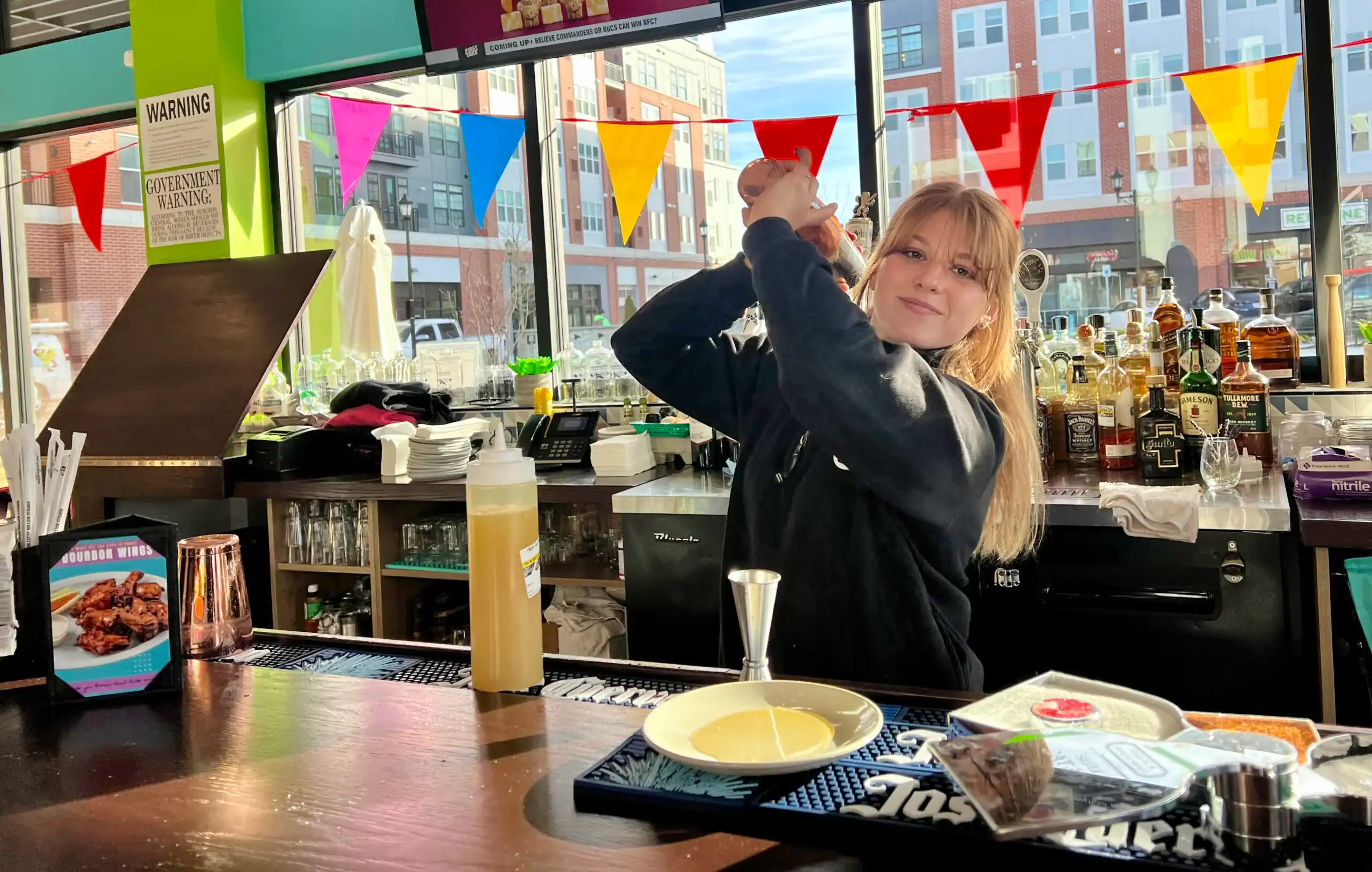
Professional bartending schools in Nassau County and across Long Island offer something free programs can’t: real bar setups. That means practicing with the same equipment you’ll use on the job. Soda guns that you learn to operate without looking. Speed rails stocked like an actual bar. Glassware that you handle until muscle memory kicks in. Cash registers and POS systems that you run through dozens of transactions until you’re comfortable.
This isn’t about being fancy. It’s about being ready. When you walk into an interview and the manager asks if you’ve worked behind a bar, you can honestly say yes, you’ve trained on real equipment in a real bar environment. That’s a very different conversation than saying you watched videos at home.
Employers in Nassau and Suffolk County know the difference. Many prefer candidates who’ve completed hands-on training because it means less time spent teaching basics and more confidence that you won’t freeze up during your first shift. Free bartending certification online gives you knowledge. Professional training gives you skill. There’s a gap between the two, and that gap costs you time and opportunities when you’re trying to get hired.
Why Employers Don't Always Recognize Free Bartending Licenses Online
Here’s an uncomfortable truth: not all certifications carry the same weight. When you apply for bartending jobs in New York with a free online certificate, hiring managers often don’t recognize the program. They’ve seen dozens of different “certifications” from platforms that don’t have any connection to the local industry. Some don’t even include New York-specific alcohol laws.
What employers in Nassau County do recognize is ATAP certification. That’s the New York State Alcohol Training Awareness Program, and while it’s not legally required to bartend in New York, it’s strongly preferred by most serious establishments. ATAP training covers the legal side of serving alcohol—how to check IDs properly, recognize signs of intoxication, refuse service when necessary, and follow state liquor laws. It’s the kind of certification that actually protects you and your employer from liability.
Most free bartending certification programs don’t include ATAP. If they do, it’s usually an add-on that costs extra, which defeats the purpose of “free.” So you end up needing to get ATAP separately, which means another course, another test, and another fee. Suddenly that free certification isn’t covering everything you actually need.
Beyond ATAP, employers want to see that you’ve trained somewhere they’ve heard of. Established bartending schools in the area have relationships with bars, restaurants, and hotels. Managers know the curriculum. They know graduates come in with hands-on experience. They trust the training. A certificate from a random website doesn’t carry that same credibility, even if the content was decent. It’s not fair, but it’s how hiring works in the real world.
Hidden Costs of Free Bartending Certification Programs
The word “free” makes it sound like there’s no cost, but that’s not quite true. You might not pay upfront, but you’ll pay in other ways. Time is the big one. If you complete a free bartending certification online and then spend months applying for jobs without getting hired, that’s months of lost income. That’s the hidden cost nobody talks about.
Then there’s the cost of what’s missing. Free programs don’t provide job placement support. They don’t have relationships with employers. They don’t offer career coaching or resume help. You’re completely on your own to figure out how to turn that certificate into work, and for most people, that’s harder than the training itself.

What Free Programs Don't Include That Professional Training Does
Professional bartending programs cost money, but they include things that free programs simply can’t offer. Start with the equipment. A real bartending school has full bar setups where you practice making drinks over and over until you’re fast and accurate. You learn to work a soda gun, build drinks in the right glassware, and handle a rush without falling apart. That’s not something you can replicate at home with a free video course.
Then there’s the instruction. In a professional program, you have experienced bartenders teaching you. They watch you work, correct your technique, share tips they’ve learned from years behind the bar, and answer questions in real time. You’re not just absorbing information—you’re getting feedback that makes you better. Free online courses don’t offer that. You’re watching a video. If you do something wrong, nobody’s there to tell you.
Job placement support is another major difference. We offer lifetime access to job resources, including a 24/7 alumni job portal where employers post openings specifically for our graduates. We also provide business consulting services that connect trained bartenders with hiring establishments. That’s an ongoing relationship, not a one-time transaction. Free programs give you a certificate and move on. They’re not invested in whether you actually get hired.
Lifetime refresher courses are something else you won’t find with free bartending certification online. Professional programs let you come back anytime to brush up on skills, learn new techniques, or regain confidence after time away from bartending. That’s valuable if you take a break and want to get back into it, or if you want to level up your skills for a better position. Free programs don’t offer that kind of long-term support.
How Professional Certification Pays for Itself in Nassau County
The real question isn’t whether professional bartending training costs more than free programs. It does. The question is whether that investment pays off, and in Nassau County, the answer is usually yes. Bartenders here can earn solid money, especially when you factor in tips. Even at a mid-level establishment, you can make back the cost of training in your first few weeks of work.
But it’s not just about recouping the tuition. It’s about the opportunities you get access to. Graduates from established programs are more likely to get hired at higher-end venues where the tips are better and the hours are more consistent. They’re more likely to move into lead bartender or bar manager roles because they have the foundation and the connections. And they’re more likely to stay employed because they were trained properly from the start.
Free bartending certification online might save you money in the short term, but if it takes you twice as long to get hired, or if you only qualify for lower-paying positions, you’re actually losing money. Professional training is an investment that typically pays for itself through better job placement, higher earnings, and faster career progression. That’s especially true in competitive markets like Nassau and Suffolk County, where employers have plenty of applicants to choose from and they’re going to pick the ones who seem most prepared.
There’s also the confidence factor. When you’ve trained on real equipment with experienced instructors, you walk into interviews differently. You’re not hoping they’ll take a chance on you—you’re showing them you’re ready. That confidence comes across, and it makes a difference in whether you get the job. You can’t put a price on that, but it’s part of what you’re paying for when you choose professional training over a free online course.
Making the Right Choice for Your Bartending Career in Nassau County
Free bartending certification online can give you a basic understanding of drinks and bar terminology, but it won’t prepare you for the reality of working behind a busy bar in Nassau County. The hidden costs—lost time, missed opportunities, lack of employer recognition, and zero job support—add up quickly. Professional training costs more upfront, but it includes hands-on experience with real equipment, ATAP certification, lifetime career resources, and the employer connections that actually get you hired.
If you’re serious about bartending as a career and not just a side hobby, investing in comprehensive training is the smarter move. You’ll be job-ready faster, you’ll qualify for better positions, and you’ll have ongoing support that helps you grow in the industry. That’s the difference between getting a certificate and building a career.
If you’re ready to train the right way and start bartending in Nassau County with real skills and real support, we offer the hands-on training and career resources that free programs can’t match.