Summary:
You’ve seen the job postings. Bartending positions across Nassau County, NY promising flexible schedules and solid money. But most want experience or certification you don’t have yet. That’s the gap you’re trying to close, and you’re smart to question which training path actually works.
Here’s what matters: employers don’t hire based on online certificates. They hire people who can step behind a real bar, handle actual equipment, and keep drinks flowing during a Friday night rush. The difference between getting hired and getting passed over often comes down to whether your training prepared you for the reality of bar work—or just taught you drink recipes you could’ve found on YouTube.
Let’s talk about what a certified bartender course actually delivers, how it differs from mixology-only training, and why hands-on preparation is the only path that consistently gets people hired.
How to Become a Certified Bartender: What Actually Gets You Hired
Walk into any hiring manager’s office in Nassau County, NY and they’ll tell you the same thing: they need bartenders who can work, not just mix drinks. That distinction matters more than most training programs admit.
A certified bartender course teaches you the full scope of bar operations. You’re learning drink preparation, yes, but also cash handling, customer management, inventory awareness, and how to move efficiently when you’ve got a line of customers three deep.
Mixology training focuses specifically on cocktail creation—flavor profiles, techniques, presentation. Both have value. One gets you hired faster. The employment market in Nassau and Suffolk Counties reflects this reality. Establishments need versatile bartenders who can handle whatever the shift throws at them.
Mixology License Online vs Hands-On Bartending Training
Online mixology courses promise convenience. Learn from home, study at your own pace, get certified without leaving your couch. Sounds perfect, except for one problem: bartending is a physical skill that can’t be learned through a screen.
Think about it this way. You can watch a thousand videos on how to free pour liquor, but until you’ve held a bottle, felt the weight, developed the muscle memory of a proper count, you don’t actually know how to do it. You can memorize every cocktail recipe ever created, but that knowledge means nothing when you’re trying to make five different drinks simultaneously while a customer is asking you a question and the register needs attention.
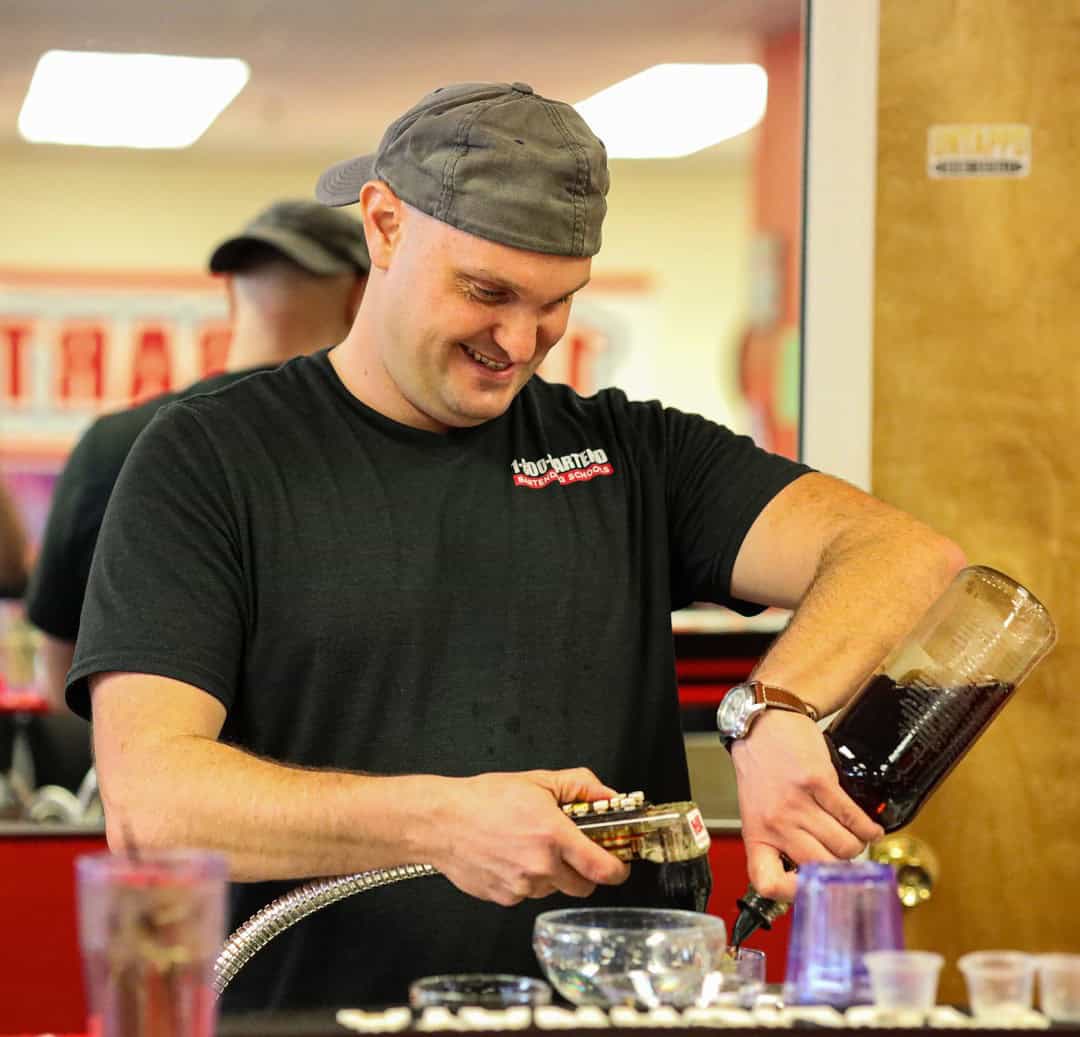
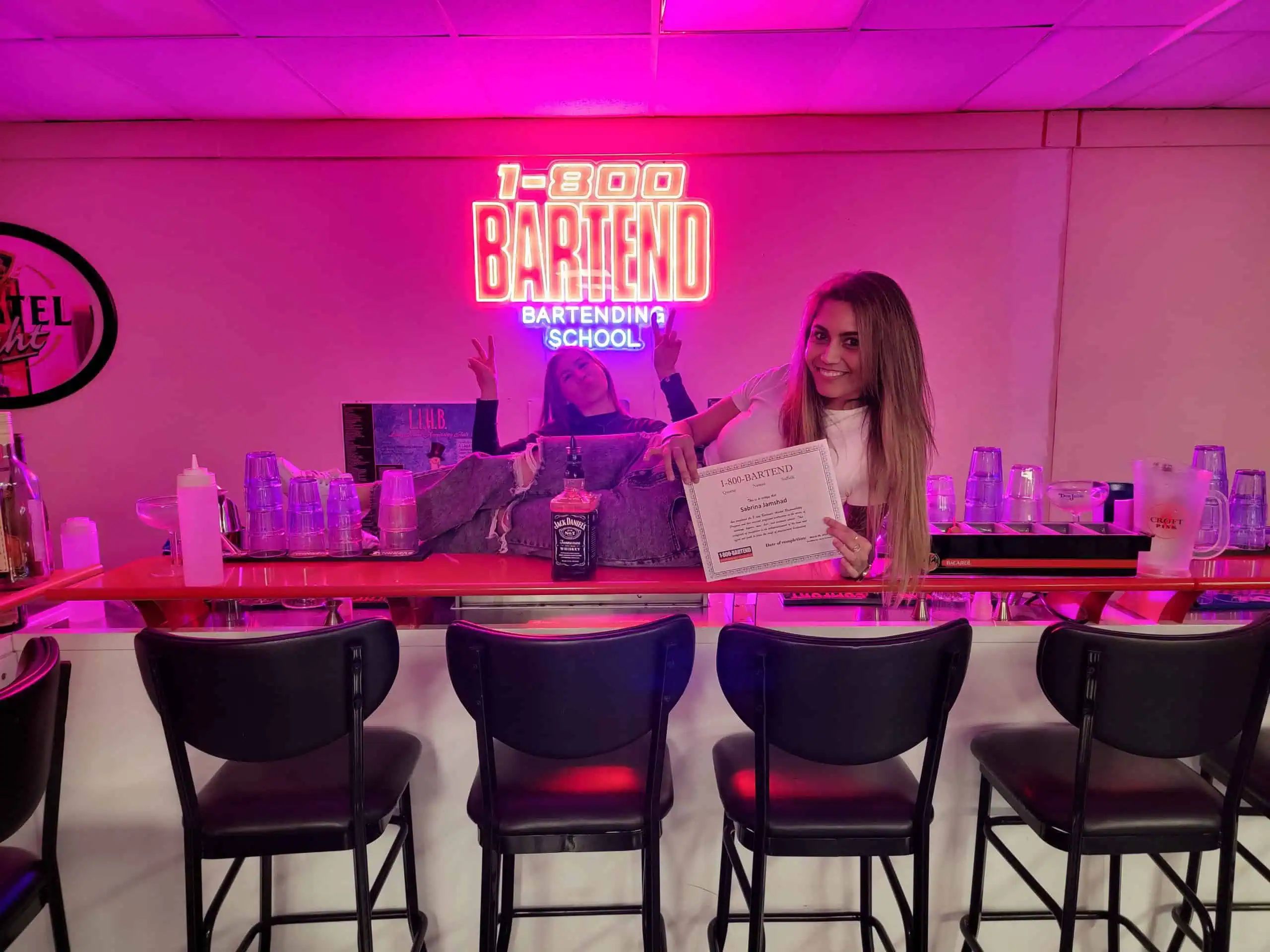
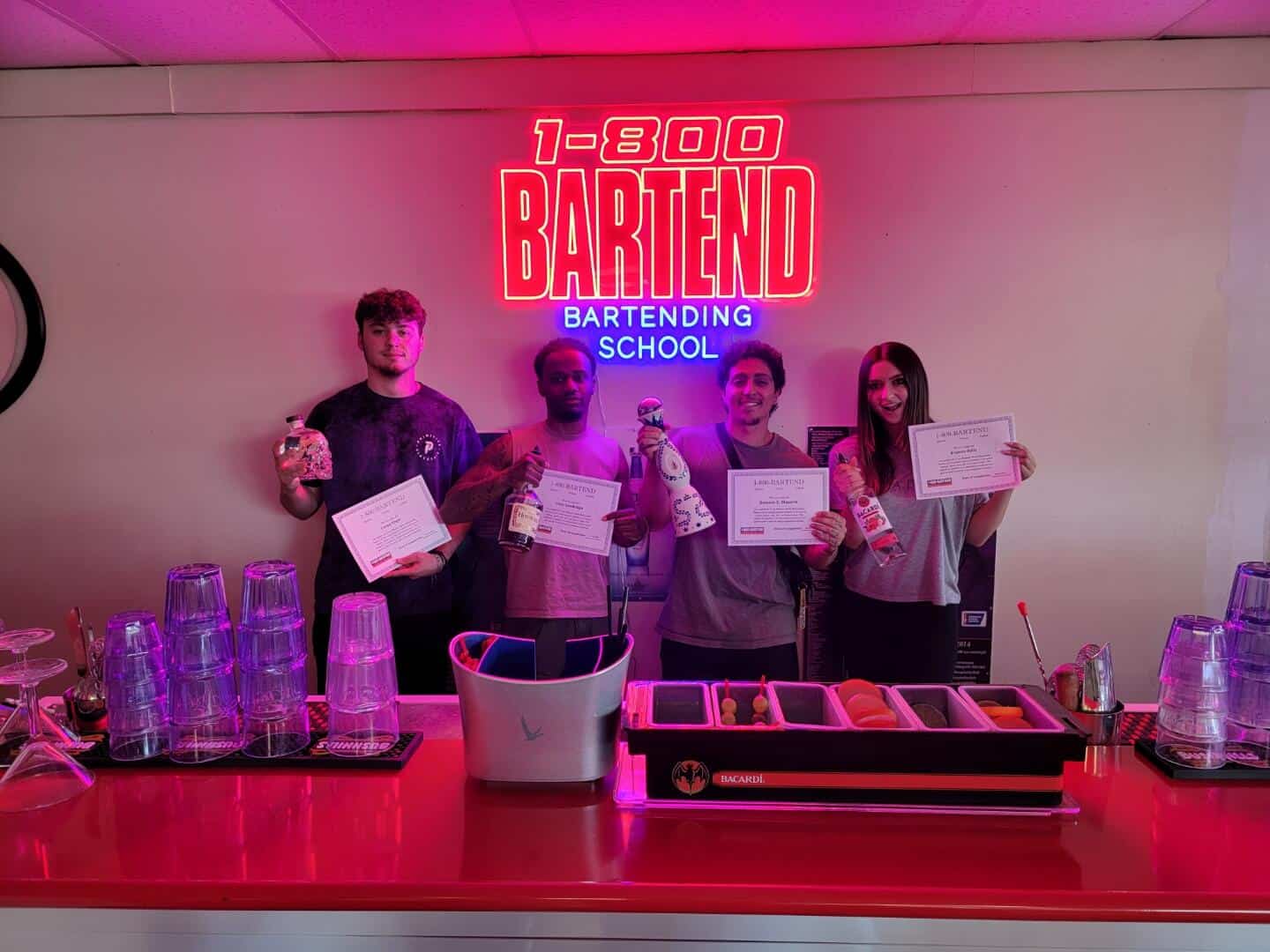
Real bar equipment training gives you something online programs can’t—actual experience with the tools you’ll use every shift. Soda guns have a specific feel and pressure. Shakers need to be held a certain way. Ice wells are positioned for efficiency.
Cash registers have their own logic. You need to build familiarity with all of it before your first real shift, not during it. The physical environment matters too—bars are loud, customers interrupt, orders stack up.
You’re working in tight spaces, often with other bartenders moving around you. Training in a real bar setup prepares you for these conditions. Online courses can’t replicate the pressure, the noise, or the spatial awareness required.
Employers know this. When you interview with hands-on training on your resume, they see someone who’s actually practiced the craft. When you interview with an online certificate, they see someone who’s read about it.
The best approach combines both worlds. A comprehensive in-person certified bartender course gives you the physical skills and real-world preparation. Then you can supplement with online resources for expanding your cocktail knowledge. But start with the foundation that actually prepares you for the job.
Why Complete Certification Covers Both Bartending and Mixology
Here’s what separates programs that actually prepare you from ones that just take your money: comprehensive curriculum that doesn’t make you choose between bartending fundamentals and mixology skills. The best certified bartender courses teach you everything in sequence.
You start with the basics—bar setup, tool identification, standard pours, common drinks. These are the skills that get you through your first shifts without embarrassing yourself. You learn how to stock a bar efficiently, where everything goes, and why it’s organized that way. You practice the drinks that make up 80% of most bar orders: basic mixed drinks, beer and wine service, simple cocktails.
Then you build on that foundation with more advanced mixology techniques. Muddling, layering, flaming, molecular mixology if the program goes that deep. You learn flavor pairing, how to build balanced cocktails, and techniques for creating signature drinks. This is where the craft becomes art.
But—and this is critical—you don’t learn advanced techniques before you can competently make a vodka soda. Programs that jump straight to elaborate cocktail creation are doing you a disservice. Employers need bartenders first, mixologists second.
Official credentialing matters too. In New York, that means ATAP certification—the Alcohol Training Awareness Program that teaches responsible alcohol service. While not legally required statewide, most Nassau County, NY and Queens employers prefer or require it. A complete program includes this certification as part of your training.
The curriculum should also cover the business side of bartending. How to upsell without being pushy. How to maximize tips through good service. How to handle difficult customers. How to work efficiently with kitchen staff and servers.
Look for programs that give you actual practice time, not just demonstration. You should be making drinks repeatedly, getting feedback, correcting mistakes, building speed and accuracy. The more repetitions you complete during training, the more confident you’ll be during your first real shifts.
Certified Bartender Course Requirements and Career Paths in Nassau County
Getting your bartending license isn’t complicated, but there’s a right way and a wrong way to approach it. The wrong way wastes time and money on training that doesn’t translate to employment. The right way gets you working within weeks.
Start by understanding what certification actually means in New York. There’s no state-mandated bartending license. What employers want is ATAP certification plus demonstrated competence.
Choose a program based on what it delivers, not what it promises. Lifetime job placement support means nothing if the school doesn’t have real industry connections. A certificate means nothing if you can’t perform behind an actual bar. Look for established schools with decades of experience and verifiable relationships with local establishments.

What Opens Up After You Get Your Bartending License
Here’s what changes once you complete a legitimate certified bartender course: doors open that were previously closed. Not because the certificate itself is magic, but because you now have the skills and credentials employers are looking for.
Nassau County, NY’s hospitality industry is diverse. You’ve got everything from casual neighborhood bars to upscale restaurants, beach clubs, catering companies, hotels, and event venues. Each offers different opportunities, different earning potential, and different work environments. Certification gives you access to all of them.
Entry-level positions typically start at establishments that value training over experience. These are places willing to take a chance on certified newcomers because they know you’ve been properly prepared. You might start with slower shifts—weekday afternoons or early evenings—and work your way up to the busy, high-earning weekend nights.
The earning potential is real. Base wages in Nassau County start around $10.65 per hour for tipped employees, but that’s just the foundation. Average daily tips of $200 substantially raise your effective earnings. Work four shifts a week and you’re looking at serious money—often more than many desk jobs pay, with far more flexibility.
Career progression happens faster than most industries. You might start as a bartender, but strong performers move into head bartender roles, bar manager positions, or even beverage director jobs. Some bartenders leverage their skills into private event work, which often pays premium rates.
The mixology path is there too, if that’s where your interests lie. Once you’ve established yourself as a competent bartender, you can specialize in craft cocktails, work your way into high-end cocktail bars, or position yourself as a mixologist who focuses on menu development. But that specialization works best when it’s built on a foundation of solid bartending fundamentals.
Geographic flexibility is another advantage. Get certified and gain experience in Nassau County, and those skills work in Manhattan, Miami, Los Angeles, or anywhere else you might want to live.
Why Nassau County Bartenders Need Comprehensive Training
Nassau County, NY sits in an interesting position geographically and economically. You’re close enough to New York City that customer expectations run high, but you’re serving a local market with its own character and preferences. That combination creates specific demands on bartenders working in the area.
Customers here have been to Manhattan cocktail bars. They’ve experienced high-level service and creative drinks. They bring those expectations to local establishments, which means Nassau County bartenders need to deliver more than just competent service—they need to show some flair, some knowledge, some ability to recommend and create drinks that impress.
At the same time, you’re working in neighborhood bars, sports venues, beach clubs, and casual restaurants where speed and efficiency matter just as much as craft. You need to bang out beer and shot orders quickly while also being able to make a properly balanced craft cocktail when someone orders one. That versatility requires training in both areas.
The seasonal nature of Long Island’s hospitality industry adds another layer. Summer brings beach crowds, outdoor events, and high-volume service. Winter shifts to indoor venues and a different clientele. Bartenders who can adapt to both environments work more consistently and earn more throughout the year.
Local establishments reflect this dual need in their hiring. They’re looking for bartenders who won’t slow down during a rush but who can also elevate the experience when customers want something special. Training that covers both skill sets makes you that candidate.
This is why comprehensive programs that combine bartending certification with mixology training perform better in this market. You’re not choosing between being a fast bartender or a creative mixologist—you’re becoming both. That combination is exactly what Nassau County’s hospitality industry needs and rewards.
Get Your Bartending License and Start Earning This Week
The path from “interested in bartending” to “actually working behind a bar” is shorter than most people realize. It doesn’t require months of training or expensive programs. It requires the right training—hands-on, comprehensive, connected to actual employment opportunities.
A week of intensive, properly structured training can give you everything you need to start working. ATAP certification that employers want, physical practice with real equipment, repetition building actual skill, connections to establishments that are actively hiring.
The market is there. Nassau County, NY has hundreds of bartending positions available at any given time. The money is real—daily tips that quickly add up to serious income. The flexibility works for most lifestyles. What’s been missing is the preparation that makes you the candidate employers actually hire.
That’s what we deliver at our school. Thirty years of experience training bartenders who go on to successful careers. Real bar setups that prepare you for actual work. Industry connections that turn training into employment. Lifetime support that extends beyond your first job into your entire career. You’re not looking for a certificate to hang on your wall—you’re looking for skills that translate into paychecks.