
Summary:
You’re looking at bartending classes because something about your current situation isn’t working. Maybe it’s the rigid schedule, the ceiling you’ve hit, or the fact that you’re spending forty hours a week doing something that doesn’t feel worth it anymore. Bartending offers a way out—flexible hours, cash in hand, and a skill set you can take anywhere. But between online courses, weekend programs, and full-time schools, figuring out which path actually gets you behind a bar and earning can feel overwhelming. This guide walks you through the real options for bartending classes in Nassau County, NY, what each format delivers, and how to choose training that leads to actual employment, not just a certificate you’ll never use.
Cocktail Making Class: What Hands-On Training Actually Teaches You
A cocktail making class isn’t about memorizing 300 recipes you’ll never use. It’s about building the muscle memory and confidence to move quickly when a Friday night rush hits and you’ve got eight tickets up at once. The best programs put you behind an actual bar setup from day one—soda guns, speed rails, glassware, blenders, and POS systems that mirror what you’ll find at real Nassau County establishments.
You’ll learn how to free pour accurately, how to shake and stir properly, and how to build drinks in the order that keeps your workflow efficient. More importantly, you’ll practice until your hands know what to do before your brain has to think about it. That’s what separates someone who took an online course from someone who’s actually ready to work.
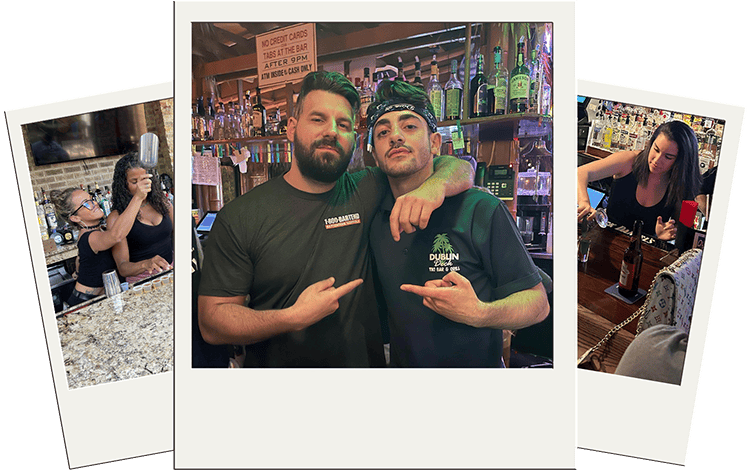
Mixology Course: Building Skills Beyond the Basics
A mixology course goes deeper than the standard well drinks and beer pours. You’re learning the why behind the what—why certain spirits pair together, how acidity and sweetness balance, and what makes a cocktail memorable instead of just drinkable. This knowledge matters more than you’d think, especially if you’re aiming for higher-end venues in Nassau County or Manhattan where customers expect bartenders to know their craft.
In a quality mixology course, you’ll work with fresh ingredients, understand the difference between shaking and stirring, and learn classic techniques that form the foundation of modern cocktail culture. You’re not just following recipes. You’re developing the palate and intuition to adjust drinks on the fly, recommend pairings, and upsell confidently without sounding scripted.
The practical difference shows up in your paycheck. Bartenders who understand mixology tend to work at establishments with higher check averages, which translates directly to better tips. A customer ordering a $16 craft cocktail tips differently than someone ordering a $6 well vodka soda. When you can explain what’s in an Old Fashioned or suggest a variation based on their taste preferences, you’re not just serving drinks—you’re creating an experience that gets rewarded.
But here’s the reality: you don’t need to become a master mixologist to start working. Most bars in Nassau County, NY need bartenders who can handle volume, not perform molecular gastronomy. A solid mixology foundation gives you options. It opens doors to better venues down the line while still preparing you to work the neighborhood spots that’ll hire you first. The key is finding training that balances classic technique with real-world application, not just Instagram-worthy garnishes you’ll never have time to make during an actual shift.
Cocktail Class: Understanding Different Training Formats
When you’re comparing cocktail class options, the format matters as much as the content. A three-hour workshop at a local bar teaches you differently than a 40-hour certification program, and both serve different purposes. If you’re exploring bartending as a hobby or planning a fun event, a casual cocktail class gives you enough knowledge to impress friends. If you’re trying to change careers and start earning within weeks, you need something more substantial.
The weekend cocktail classes you’ll find in Nassau County typically run two to four hours and focus on a specific theme—summer cocktails, whiskey basics, or classic techniques. They’re social, low-pressure, and give you a taste of what’s involved. You’ll leave with a few recipes and maybe some confidence to experiment at home. What you won’t leave with is the speed, efficiency, or comprehensive knowledge that employers look for when hiring.
Full certification programs—usually 40 hours spread over one to two weeks—treat bartending as a professional skill, not a hobby. You’re learning drink recipes, sure, but also cash handling, inventory management, customer service under pressure, and how to spot someone who’s had too much. You’re practicing on real equipment until your pours are consistent and your movements are efficient. You’re getting certified in New York State A.T.A.P. training, which most employers require or strongly prefer for liability protection.
The investment difference reflects the outcome difference. A casual cocktail class might cost $50-150 for an evening. A professional bartending program runs $400-800 but includes job placement support, lifetime refresher access, and the kind of hands-on practice that actually prepares you for your first shift. Think about what you’re trying to accomplish. If you want to tend bar professionally in Nassau County, NY, choose training designed to get you hired, not just entertained. The casual classes are fun. The professional programs are functional. Know which problem you’re solving before you sign up.
Bartending Classes Online: When Remote Learning Works and When It Doesn't
Bartending classes online appeal to anyone with a tight schedule or limited budget. You can learn on your couch, pause when life interrupts, and spend $50-200 instead of $400-800. The question isn’t whether online courses teach you things—they do. The question is whether what they teach translates to employability when you walk into a bar and ask for a job.
Online programs excel at knowledge transfer. You’ll learn drink recipes, ingredient profiles, bar terminology, and the theory behind techniques. If you need to pass a written test or understand the basics before starting hands-on training, online courses deliver that efficiently. The problem is that bartending isn’t a knowledge-based job. It’s a physical skill learned through repetition under realistic conditions.

Online Mixology Course: What You Can Actually Learn Remotely
An online mixology course can teach you the history of cocktails, the flavor profiles of different spirits, and the recipes for hundreds of drinks. You can watch demonstrations of proper shaking technique, learn the difference between a Boston shaker and a cobbler shaker, and understand why some cocktails are stirred while others are shaken. All of that has value, especially if you’re combining it with practical experience.
Where online training falls short is in the feedback loop. When you’re practicing at home, nobody’s correcting your pour count, adjusting your grip on the shaker, or showing you a faster way to build three drinks simultaneously. You can watch a video of someone making a Mojito, but you won’t know if you’re muddling too aggressively until a manager tells you you’re destroying the mint and making drinks taste bitter. You can read about free pouring, but without someone watching and correcting, you might be over-pouring every drink and costing your employer money.
The other limitation is equipment access. Most people don’t have a full bar setup at home—speed rails, soda guns, multiple types of glassware, ice wells, and a POS system. You can practice with a shaker and a jigger, but you’re not simulating the environment you’ll actually work in. When you show up for your first shift at a busy Long Island restaurant and don’t know where anything is or how the soda gun works, that online course didn’t prepare you for the reality of the job.
That said, online mixology courses work well as supplements. If you’re taking an in-person bartending program and want extra recipe practice, an online course gives you that. If you’re working as a barback and want to learn theory while you’re gaining practical experience, online training fills that gap. If you’re in a rural area with no bartending schools nearby, online courses at least give you a starting point. Just don’t expect to complete an online program, print your certificate, and walk into a Nassau County, NY bar with employers lining up to hire you. The market doesn’t work that way. Hands-on experience still matters more than any online credential.
Bartending Degree Online: Separating Credentials from Credibility
The term “bartending degree online” sounds official, but it’s mostly marketing language. Bartending isn’t a degree program in the traditional sense—there’s no accredited bachelor’s or associate’s degree in bartending. What you’re actually looking at is a certificate program, and the value of that certificate depends entirely on whether employers in your market recognize or care about it.
Some online programs call themselves degrees to justify higher prices or create the impression of legitimacy. In reality, bar managers in Nassau County, NY don’t care if you have a “degree” in bartending. They care if you can make drinks quickly and accurately, handle a rush without falling apart, and provide service that keeps customers coming back. A certificate from a program that taught you those skills has value. A fancy title from an online course that only covered theory doesn’t.
New York State doesn’t require a bartending license to serve alcohol. What employers do require—or at least strongly prefer—is A.T.A.P. certification (Alcohol Training Awareness Program). This is state-approved training that covers responsible alcohol service, recognizing intoxication, checking IDs properly, and understanding liability laws. Employers want this because it reduces their insurance costs and protects them legally if something goes wrong.
Here’s what matters when evaluating any online bartending program: Does it include state-approved A.T.A.P. certification? Does it provide hands-on practice components or just video lectures? Does it offer job placement support or connections to employers? Is it recognized by bars and restaurants in your area? Most importantly, can you practice the physical skills you’re learning, or are you just watching someone else do them?
If you’re considering an online program because of cost or schedule constraints, look for hybrid options. Some schools offer online theory components combined with in-person practice sessions. You learn recipes and regulations on your own time, then come in for hands-on training with real equipment and instructor feedback. This model gives you flexibility without sacrificing the practical experience that actually prepares you to work. Pure online programs have their place, but if your goal is employment in Nassau County’s competitive bar scene, invest in training that includes real-world practice. The difference shows up in how quickly you get hired and how confident you feel on your first shift.
In Person Bartending Class: Why Hands-On Training Still Matters
An in person bartending class puts you in the environment you’ll actually work in. You’re standing behind a bar, not sitting at a computer. You’re handling bottles, operating soda guns, and building drinks while someone with years of experience watches and corrects your technique. You’re making mistakes in a low-stakes setting where the cost is a wasted practice pour, not a frustrated manager or lost tips.
The value of in-person training isn’t just about learning—it’s about repetition under realistic conditions. You practice making the same drink twenty times until your hands know the motions. You work through scenarios where multiple tickets come in at once and you have to prioritize and sequence your work. You learn how to move efficiently in a confined space, how to communicate with other bartenders during a rush, and how to recover when you mess something up.