Summary:
You’ve seen the ads. Virtual cocktail classes delivered to your door. Learn mixology from your couch. Team building that doesn’t require pants.
Some of it sounds too good to be true. Some of it actually works.
The truth is, online mixology lessons serve a real purpose—but not for everyone, and not for every goal. If you’re looking to impress your friends at your next dinner party, virtual classes can absolutely get you there. If you’re trying to land a bartending job and build a career, that’s a different conversation entirely.
Here’s what you actually need to know about when virtual mixology training works, when it falls short, and what separates hobby learning from professional preparation.
What Are Virtual Mixology Lessons and How Do They Work
Virtual mixology lessons are live, interactive classes where a professional mixologist teaches you how to make cocktails from home. You join via Zoom or another platform, follow along in real time, and craft drinks alongside other participants from wherever you happen to be.
Most programs send you everything you need ahead of time. That usually includes small bottles of spirits, mixers, syrups, bitters, garnishes, and sometimes basic bar tools like a jigger or shaker. You get a shopping list for any fresh ingredients—lemons, limes, herbs—and a link to join the class.
The instructor walks you through each drink step by step. You shake, stir, muddle, and pour along with them. There’s usually time for questions, some cocktail trivia, and a chance to show off your finished product. The whole experience typically runs 60 to 90 minutes, and yes, you get to drink what you make.
Virtual Cocktail Class With Kit: What's Actually Included
When you book a virtual cocktail class with kit delivery, you’re paying for convenience. The kit arrives at your door a few days before the class, and it’s designed to eliminate the guesswork.
Inside, you’ll typically find 50ml bottles of the base spirits you’ll be using—enough to make one or two servings of each cocktail. You’ll also get pre-measured syrups, bitters, and any specialty ingredients that aren’t easy to find at a regular grocery store. Some kits include branded jiggers, shakers, or bar spoons, though many assume you’ll use what you already have at home.
The upside is that you don’t have to buy full-size bottles of liquor you might never use again. The downside is that the portions are small, the tools are often lightweight, and the experience doesn’t come close to replicating what it’s like to work behind an actual bar.
You’re not pouring from speed rails. You’re not managing multiple orders at once. You’re not dealing with a soda gun, a glass washer, or a customer who just changed their mind for the third time. It’s a curated, controlled experience—which is perfect for learning a few recipes and having a good time, but it’s not job training.
If your goal is to understand flavor profiles, practice a few techniques, and feel more confident making drinks at home, these kits deliver. If your goal is to work in a bar, you’re going to need a lot more than a 50ml bottle and a plastic jigger.
The kits also come with recipe cards, which is helpful if you want to recreate the drinks later. Some companies offer mocktail versions for people who don’t drink alcohol, and most allow you to choose between different cocktail themes—tiki drinks, whiskey-based classics, seasonal specials, and so on.
Prices vary widely depending on the provider and the number of drinks you’re making, but expect to pay anywhere from $25 to $100+ per person. For a team event with 20 people, that adds up quickly, but it’s still cheaper than renting a venue and hiring a bartender in person.
Virtual Mixology Class Team Building: Does It Actually Work
Virtual mixology class team building has become one of the most popular remote corporate activities, and it’s not hard to see why. It’s interactive, it’s different from the usual Zoom fatigue, and it gives people something to do with their hands while they connect with coworkers.
The format works well because it’s collaborative without being competitive. Everyone’s making the same drinks, learning the same techniques, and sharing the experience in real time. There’s built-in conversation—people compare their results, ask questions, joke about their garnishes, and actually engage instead of sitting silently on mute.
Companies use these classes for onboarding new hires, celebrating milestones, rewarding teams, or just breaking up the monotony of back-to-back meetings. The informal setting helps people relax and show a different side of themselves, which can be valuable for building rapport, especially on distributed teams.
From a logistics standpoint, virtual mixology works because it’s scalable. You can run a class for 10 people or 100, and everyone gets the same experience. The kits ship directly to each participant, the instructor manages the session from a single location, and you don’t have to worry about venue rentals, travel, or dietary restrictions beyond offering mocktail options.
The instructors are usually professional bartenders or mixologists who know how to keep a group engaged. They share stories, offer tips, explain the history behind certain drinks, and make the whole thing feel less like a webinar and more like a night out—even though everyone’s at home.
That said, it’s still a screen-based activity. Some people love it. Others would rather be doing literally anything else. If your team is burned out on virtual events, adding one more Zoom call—even a fun one—might not land the way you hope.
But when it works, it works well. People walk away with new skills, a few laughs, and maybe a new favorite cocktail. And for remote teams that don’t get many chances to do something together, that’s worth something.
When Hands-On Bartending Training Actually Matters
Here’s where the conversation shifts.
If you’re exploring mixology lessons because you want to change careers, make extra money, or work in hospitality, virtual classes won’t get you there. They’re a starting point at best. At worst, they’re a distraction that delays the real work.
Bartending is a physical job. You’re on your feet for hours. You’re moving fast, managing multiple orders, reading a room, handling cash, operating equipment, and keeping your cool when things get chaotic. None of that translates through a screen.
Employers in Nassau County, NY and beyond don’t hire bartenders based on how well they followed a Zoom class. They hire people who can handle the pressure, work the tools, and deliver consistent results under real conditions. That requires hands-on training with actual bar equipment in an environment that mirrors what you’ll face on the job.
Why Real Bar Equipment Changes Everything
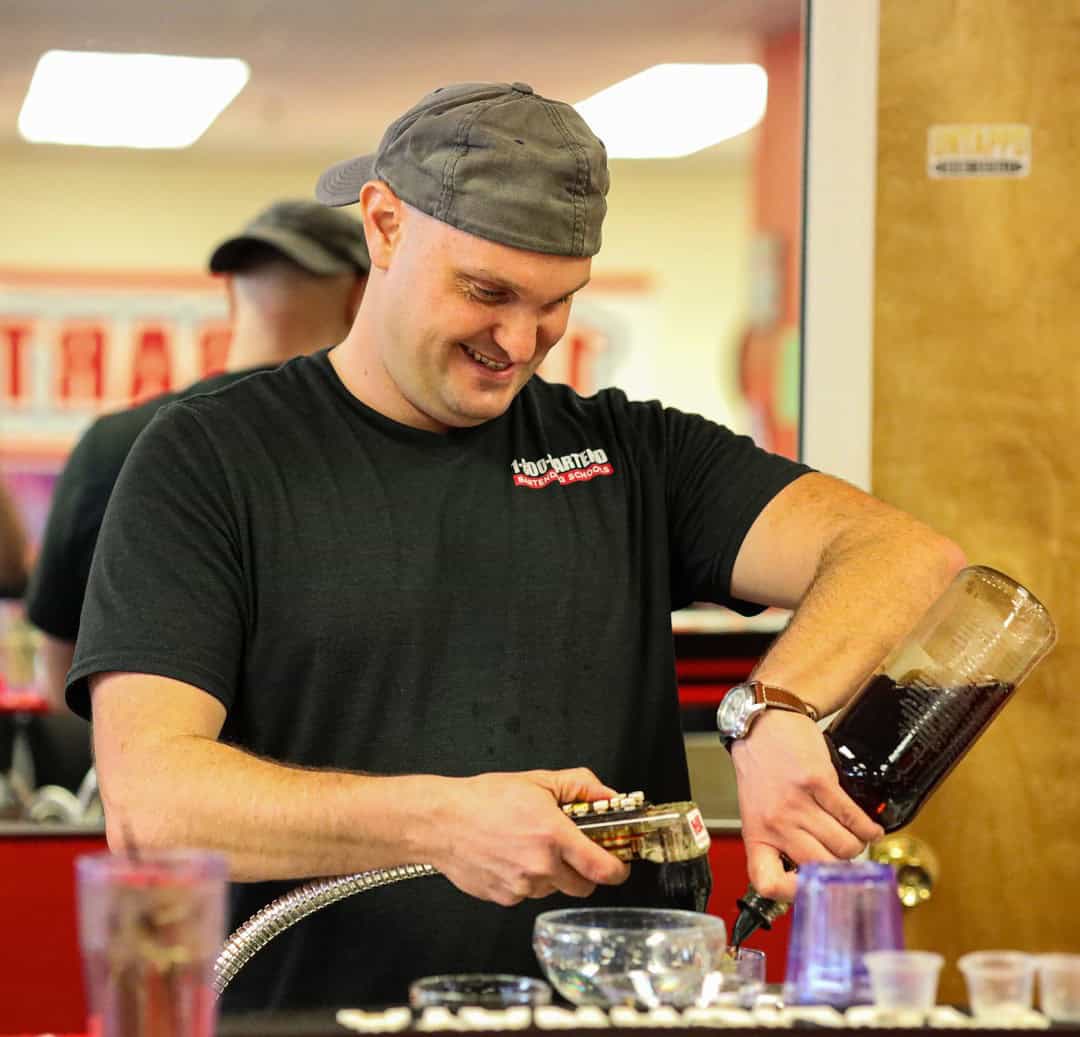
When you train with real bar equipment, you’re not just learning recipes. You’re building muscle memory. You’re learning how a soda gun feels in your hand, how fast a draft pours, how to free-pour without a jigger, how to shake a cocktail until it’s properly chilled, and how to work efficiently when the bar is three-deep with customers.
You’re practicing with the same glassware, the same speed rails, the same ice bins, and the same point-of-sale systems you’ll use in an actual bar. You’re learning how to set up your station, stock your well, keep your workspace clean, and move through a shift without wasting time or making costly mistakes.
Virtual kits can’t replicate any of that. A plastic shaker and a 50ml bottle teach you the concept, but they don’t teach you the craft. You’re not learning how to work under pressure. You’re not getting feedback from an experienced bartender who can watch your technique and correct it in real time. You’re not developing the speed, the rhythm, or the confidence that employers expect from someone they’re about to put behind their bar.
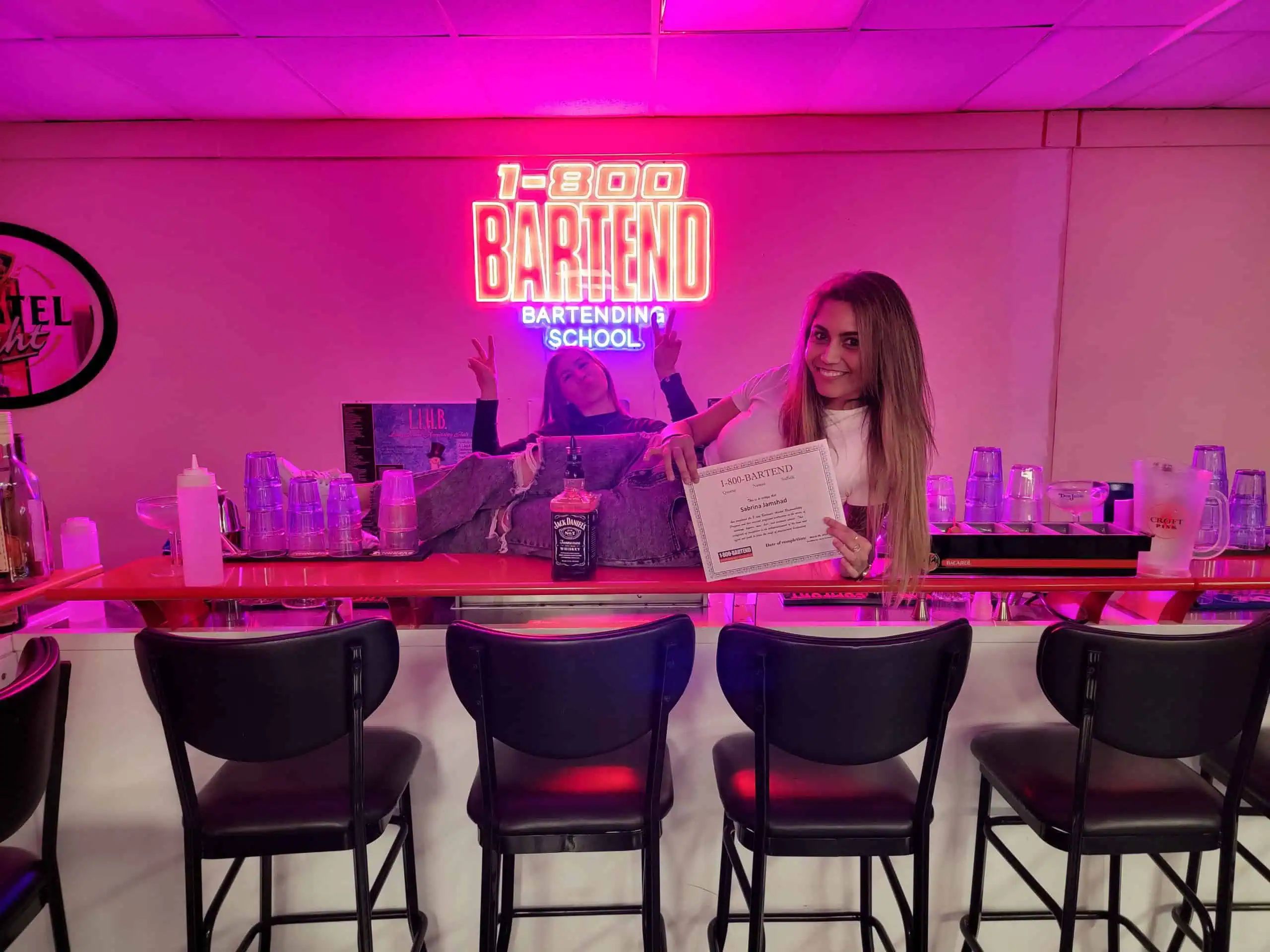
At our Nassau County, NY locations, students train on real setups that mirror professional bar environments. That means working with soda guns, cash registers, full-size bottles, commercial glassware, and all the tools you’ll actually use on the job. It’s hands-on from day one, and it’s designed to prepare you for real shifts, not just recreational cocktail making.
The difference shows up in job interviews. When a hiring manager asks if you know how to use a soda gun, you’re not guessing. When they ask if you can handle a Friday night rush, you’ve practiced that scenario. When they ask about your experience, you can talk about the equipment you’ve used, the techniques you’ve mastered, and the training you’ve completed—not a virtual class you took on your laptop.
That’s the gap virtual mixology lessons can’t close. They’re great for what they are, but they’re not a substitute for the real thing.
Career Training Requires More Than Cocktail Recipes
Learning to make a margarita is one thing. Learning to bartend is something else entirely.
A professional bartending course covers way more than drink recipes. You’re learning New York State alcohol laws, responsible service practices, how to check IDs, how to handle difficult customers, how to cut someone off safely, and how to protect yourself and your employer from liability. You’re learning bar setup, inventory management, upselling techniques, and how to maximize your tips without being pushy.
You’re also learning the business side. How bars operate. How to work with other staff. How to keep a bar profitable. How to build a repeat customer base. How to present yourself professionally in an industry that values personality as much as skill.
None of that shows up in a virtual cocktail class. Those programs are built for entertainment and basic education, not career preparation. They’re not designed to get you hired, and they’re not structured to give you the credibility or the connections you need to break into the industry.
That’s why we offer more than just training. With over 30 years of experience and a reputation as New York’s largest bartending school, we’ve built relationships with employers across Long Island, Queens, and beyond. Our 24/7 alumni job portal connects graduates with real opportunities, and our lifetime career support means you’re not on your own once the class ends.
We also provide New York State A.T.A.P. certification, Alcohol Beverage Control Law training, and B.A.R. certification—credentials that employers recognize and value. You’re not just walking away with a participation certificate from a Zoom class. You’re walking away with official credentialing that opens doors.
And because we offer both a five-day full-time program and a condensed one-day option, you can choose the path that fits your schedule without sacrificing the quality of your training. Both programs are hands-on, both include certification, and both are designed to prepare you for real bartending work.
If your goal is to make this a career, that’s the kind of training that actually matters. Virtual mixology lessons can spark your interest, but they can’t replace the experience, the equipment, the certification, or the job placement support that a professional bartending school provides.
Choosing the Right Path for Your Goals
Virtual mixology lessons work when your goal is to have fun, learn a few cocktails, or bring your team together for a unique experience. They’re entertaining, accessible, and genuinely useful for home bartending and social events.
But if you’re serious about bartending as a career, you need more than a kit and a Zoom link. You need hands-on training with real equipment, professional certification, and access to the job market. You need a program that understands the difference between making drinks and working behind a bar.
That’s where we come in. With two locations in Nassau County, NY, 30+ years of experience, and a track record of launching careers in as little as one week, we offer the kind of training that actually leads to jobs—not just cocktail party tricks.
If you’re ready to take bartending seriously, reach out and see what hands-on training can do for your career.