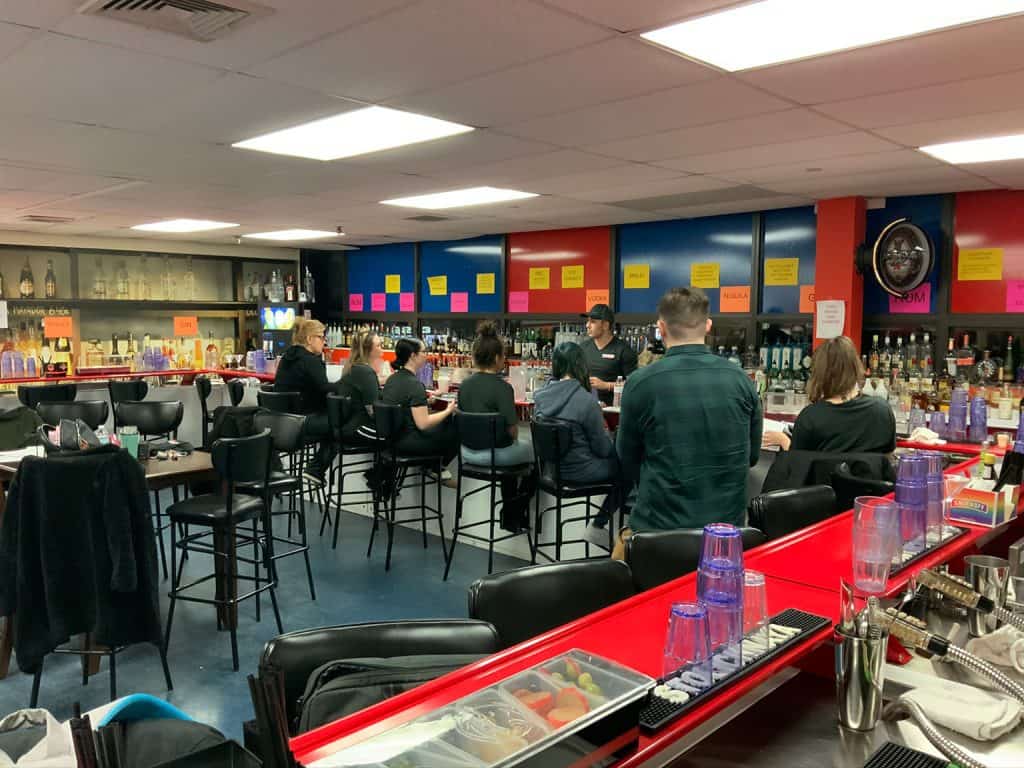
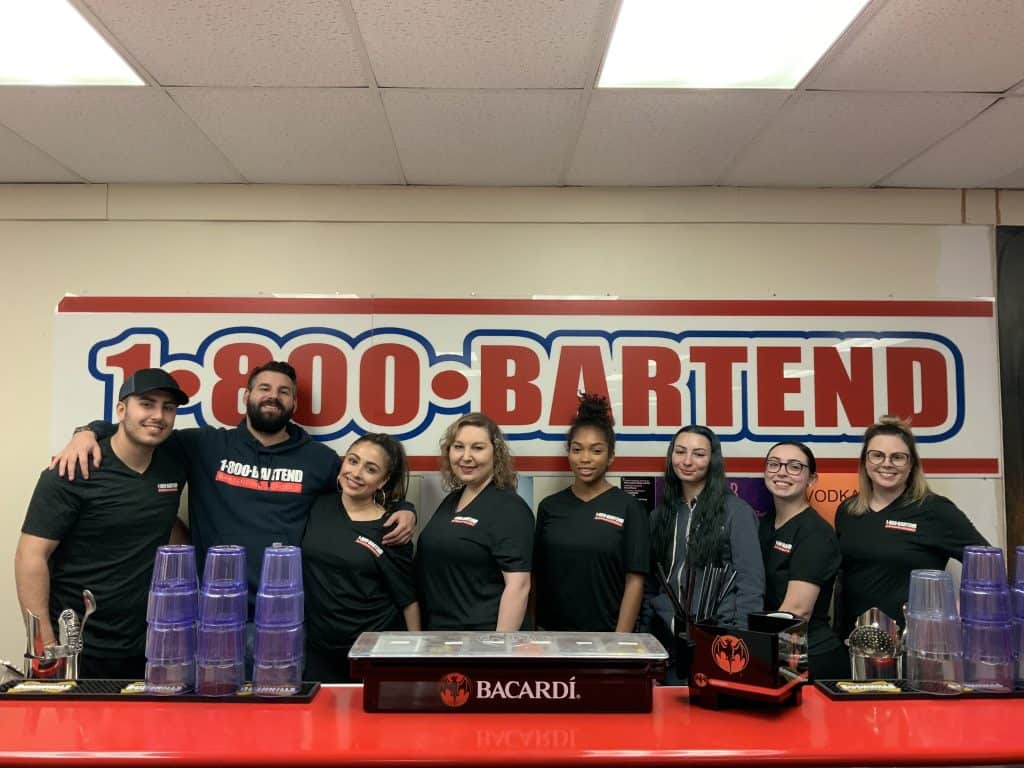
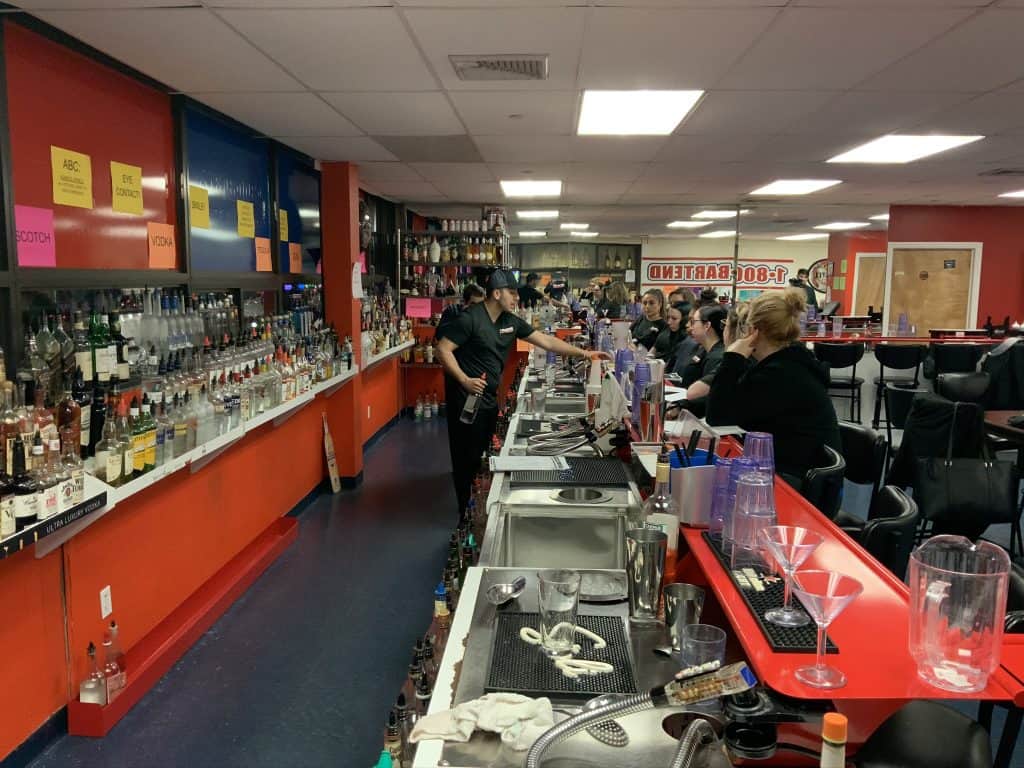
1-800-Bartend is an excellent bartending school in Jamaica, NY. Our teachers are experienced and love teaching. We offer classes to help you learn the skills you need to be a bartender.
You need a bartending license to work as a bartender. 1-800-Bartend in Jamaica, NY can help you get your license and ATAP certification. Contact us at 631-393-2722 to learn more.
The neighborhood was named Yameco, a corruption of the word yamecah, meaning “beaver”, in the language spoken by the Lenape, the Native Americans who lived in the area at the time of first European contact. The semivowel “y” sound of English is spelled with a “j” in Dutch, the language of the first people to write about the area; the English retained the Dutch spelling but replaced the semivowel sound with the affricate [dʒ] sound that the letter “j” usually represents in English. The name of the island Jamaica is unrelated, coming from the Taíno term Xaymaca, meaning “land of wood and water” or “land of springs”.
Jamaica Avenue was an ancient trail for tribes from as far away as the Ohio River and the Great Lakes, coming to trade skins and furs for wampum. It was in 1655 that the first settlers paid the Native Americans with two guns, a coat, and some powder and lead, for the land lying between the old trail and “Beaver Pond” (now filled in; what is now Tuckerton Street north of Liberty Avenue runs through the site of the old pond, and Beaver Road was named for its western edge). Dutch Director-General Peter Stuyvesant dubbed the area Rustdorp (“rest-town”) in granting the 1656 land patent.
The English took over in 1664 and made it part of the county of Yorkshire. In 1683, when the Crown divided the colony of New York into counties, Jamaica became the county seat of Queens, one of the original counties of New York.